
Our Facebook Page to Follow: Aquarium/Pond Answers Facebook
This is a unique resource for answers, help, & advice to aquarium and pond questions not found elsewhere; With regular posts & article updates.
In our research; we use aquaculture, horticulture, medical, & university research to compile many of our articles.Our Recommended Lighting for highest efficiency professional planted/reef aquariums: "AquaRay Lighting"
Aquarium Substrate, Gravel, Pebbles & Sand; Which to Use?
Aquarium Gravel/Sand Substrate, Which to Use; Including Pictures
BASICS:
For the average fish only freshwater aquarium I recommend 2-3” of #3 gravel (#3 gravel is .2 to .5 cm in size) or a larger pea sized gravel #5. (#5 is generally about 1 cm)
This allows less build up of hydrogen sulfide producing anaerobic bacteria than with sand. The down side to larger gravel is that it will allow for more waste particle or eaten food to accumulate in the larger crevices that form between the pebbles. With proper cleaning procedures though, waste accumulation should not be a major problem.
*Sunburst Rock; #3 Gravel
*Sunburst Rock; Pea sized gravel (#5)
Unless the gravel/sand is labeled as "pre-rinsed", it should be rinsed in a bucket about three times (or until it runs clear).
If you are not planning to add plants, I would be careful with the use of #00 or #1 sand (#1 sand is commonly used in mortar/masonry) as this can cause dangerous anaerobic Hydrogen Sulfide production in un-planted tanks when anaerobic de-nitrification goes from production of nitrogen to hydrogen sulfides due to sulfur reduction; please see this article for more on this subject:
Hydrogen Sulfide production in anaerobic De-Nitrification for Aquarium/Pond Nitrate Removal
If #1 sand is used in a non-live planted freshwater aquarium, the use of #3 or #5 also provides a way to lower your chances of hydrogen sulfide production. Larger debris/organic mulm will gather for easier cleaning with a gravel vacuum, or Eheim Sludge Remover.
Sand is good for heavily planted aquariums. It provides a better anchor for the roots and even more important, it traps nutrients and symbiotic bacteria needed by plant roots. If used for live plants, I recommend about ½” #00 or #1 sand followed by 2-1/2” of medium (#3) gravel, with laterite mixed in around plant roots. Be careful when vacuuming sand as it is easy to suck it into the vacuum and if it is a powered vacuum, this can damage it or clog a Python or similar.
I recommend quick probes into sand and possibly ‘kinking’ the tubing behind the vacuum nozzle to allow the sand to settle back into the tank.
If your aquarium is going to be only lightly or moderately planted, I recommend sand only in the area around the plant roots and use #3 size gravel (or larger) elsewhere.
Sometimes in these lightly planted aquariums I will actually substitute sand for lightly sifted sandy soil.
I prepare this by digging in a clean area for my soil then I rinse it gently (as if I am panning for gold). After I have rinsed out the muck and dirt I add a 20/1 water/bleach solution for a few minutes then rinse it with a De-Chlorinator and I am ready to go.
A better method (that can be use to totally replace the aquarium substrate or used only around plant roots) are products such as Eco-Complete or SeaChem Flourite.
Flourite Aquarium Plant Substrate in particular will add iron, calcium, magnesium, potassium, sulfur and many other elements to nourish your aquatic plants. Unlike competing products Flourite may be mixed with other gravel and it never has to be replaced. It remains effective for the life of the aquarium.
Flourite is excellent when combined with Sea Chem Excel.
Product References:
SeaChem Flourite Plant Substrate
Sea Chem Excel
ADVERTISEMENT
Colored/Epoxy Coated gravels have been quite popular in the past.
The epoxy coating can be used to just make natural gravels appear more shiny or as a way to bring a rainbow of colors to your aquarium substrate.
The downside to these epoxy coated gravels is that this coating in time can peal and allow for trapping of organic debris that will show up as higher nitrates, lower pH/KH, and a poor Redox balance. If this happens, it is best to change out your epoxy coated substrate,
Another downside is these epoxy coatings do not allow as much surface area for nitrifying bacteria, although this is in reality more of a problem when under gravel filters are employed.
Here are a few pictures of Aquarium Gravels I have used and recommend: (Please click pictures to enlarge)
 Regular Pebbles- excellent pea sized (slightly larger than pea size) for use with Goldfish and Bettas
 Coral Sea Pebbles- another good choice for Goldfish, Bettas and other larger pea sized gravel applications
 #3 Aquarium Gravel, natural rainbow- excellent overall aquarium gravel for most freshwater applications
 #3 Aquarium Gravel, White Coral- excellent overall aquarium gravel for most freshwater applications (this is NOT actual coral, rather natural rocks with the color of coral rock)
 #1 Aquarium/River Sand- excellent for planted aquariums. This sand is best used only where plant roots are present and only to be used with other more coarse substrates in areas where plant roots are not present. Where roots are present, 100% usage is OK.
Use of #1 sand in areas that are not turned regularly or where plant roots are not present can result in Hydrogen Sulfide production in your aquarium
Hydrogen Sulfides in aquarium
I would recommend checking with local decorative rock/building supply business for these substrates, such as this Sun Burst Rock in Los Angeles County.
OTHER CONSIDERATIONS INCLUDING FISH YOU PLAN TO KEEP & BIO-TOPE:
- Goldfish tend to root around and can get the #3 gravel stuck in their mouth, so for them, a #1 sand or larger #5 pebble would be better (or even no gravel at all!). See the above pictures for some ideas.
- Cory Catfish should be kept in an aquarium with smooth sand or rounded gravel/pebbles so as to not damage their barbells.
Be very careful with some planted substrates or coral based substrates that might have sharp edges (often that are difficult to see unless under a magnifying glass). - African Cichlids and other digging cichlids do best with a #3 gravel (or a #3 crushed coral can be used for some African cichlids, keeping in mind that crushed coral is a poor alkaline buffer despite myths to the contrary).
- Large predators such as Arowanas that may on occasion try and capture prey on the bottom by swooping down unto the bottom often do best with a coarse rounded gravel so as to prevent injury or even no gravel at all.
- If matching a substrate/gravel/sand to a biotope, you need to consider that your aquarium is a closed environment.
This means that if sand is the best biotope match, you also need to note that without plants, this can be a problem with hydrogen sulfide production.
Ditto goldfish and the previously mentioned Arowana. Using a substrate that better matches the biotope, but also risks injury or even death to your pet fish is a potential sacrifice you need to consider. - For hospital, breeding, or heavily populated temporary holding tanks; no sand or gravel is best. This allows for less waste build up, less possibility of waste matter or substrate absorbing medication in a hospital tank, and less rotting organic sludge in a holding tank.
- A bare tank is easier to vacuum debris and allows no chance of fry being caught in the substrate.
- Consider mixing different types of natural or colored gravels to achieve a look you like. I think blue mixes very well and can bring out certain fish colors. Black gravel or pebbles also mixes well, especially with natural gravels.
Take into consideration your aquarium lighting as a more natural 6400-6500k daylight will bring out the most natural colors in your aquarium gravel/substrate.
However a light with heavy red spikes such as the TMC Flexi-Red LED Strips or Colour Plus LED Tile will emphasize red colors in rock, fish, plants, etc.
A Blue light or higher kelvin daylight such as 14,000k or 20,000k will emphasize blues in your aquarium.
Product References:
TMC Flexi-Red LED Strips
TMC Colour Plus 1500 LED Tile - For hospital, breeding, or heavily populated temporary holding tanks; no sand or gravel is best. This allows for less waste build up, less possibility of waste matter or substrate absorbing medication in a hospital tank, and less rotting organic sludge in a holding tank.
- If changing over your substrate, to a totally new substrate (NOT just adding to it), I recommend performing this change over in three separate phases to avoid any possible interruptions in your aquarium nitrogen cycle.
If your aquarium is healthy and well established, spacing this 3 partial changes 2-3 weeks apart works well. If your tank is not well established and is have issues with ammonia, nitrite level stability, I recommend spacing each change out 6 weeks apart.
Again, I want to emphasize that just adding gravel without removing any such as adding some smooth pebbles to cover sharper edge rocks or sand, does not require any spacing as it will not interrupt the nitrogen cycle.
By Carl Strohmeyer American Aquarium Products-Aquarium Information
Related/Recommended Aquarium Resources

Aquarium or Pond UV Sterilization

Algone Water Clarifier & Nitrate Remover
An awesome USA made product; Nitrate fixating microorganisms incorporate excess nitrogen into the cellular mass, while bioactive enzymes assimilate nitrogen from the water column

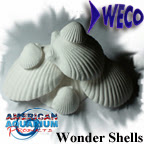
Wonder Shells, Regular & Medicated
Unique Version sold ONLY at American Aquarium Products.
Excellent for disease prevention!!!




Labels: aquarium, Aquarium Gravel, aquarium sand, river sand, Rock, Sand, Substrate

<< Home


