
Our Facebook Page to Follow: Aquarium/Pond Answers Facebook
This is a unique resource for answers, help, & advice to aquarium and pond questions not found elsewhere; With regular posts & article updates.
In our research; we use aquaculture, horticulture, medical, & university research to compile many of our articles.Our Recommended Lighting for highest efficiency professional planted/reef aquariums: "AquaRay Lighting"
Hydrogen Sulfide in Aquariums
Hydrogen Sulfide production in anaerobic De-Nitrification for Aquarium/Pond Nitrate Removal
Sections Include
By Carl Strohmeyer-PAMR 35+ years experience
Updated 1/12/19
Basics/Overview
Hydrogen Sulfide is unfortunately often a companion of anaerobic de-nitrification, of which denitrification is an important aspect of keeping low nitrate levels in both salt and freshwater.
This said, it is important to achieve de-nitrification without undue amounts of Hydrogen sulfide produced, but often this is difficult since both are byproducts of organic breakdown in environments that are either mostly devoid or totally devoid of oxygen. However within the last point is part of the answer as well!!
Hydrogen sulfide (sulfate reduction) generally results from the bacterial breakdown of organic matter in the total absence of oxygen, where as de-nitirifcation (nitrate reduction) that lowers nitrates while producing free nitrogen generally happens in an environment that is mostly devoid of oxygen but not completely devoid as in hydrogen sulfide production.
The production of Hydrogen Sulfide in aquariums (both salt and even more so freshwater) is a controversial subject, often with unclear answers as to whether anaerobic de-nitrification is beneficial in freshwater due to the POSSIBLE production of Hydrogen Sulfide.
The keyword is “possible” as in saltwater, you CAN have de-nitrification with no or low hydrogen sulfide production.
With the most current research (although admittedly not conclusive in my view), you CAN have anaerobic de-nitrification and NOT have dangerous levels of Hydrogen Sulfide produced in both fresh & saltwater. With healthy de-nitrification it is possible to have low nitrate levels below 20 ppm
ADVERTISEMENT
Points to achieving De-Nitrification (Removal of Nitrates) without Hydrogen Sulfide Production
- One study showed that even though sulfate reduction (the production of hydrogen sulfides from Nitrates/Sulfur) took place maximally at ¾ inch (1-2 cm) depth, free hydrogen sulfide was present only below a depth of 2-1/2 inches (6-7 cm), above which Fe++ (Iron) was available for precipitation as iron sulfides.
So with this study in mind, keeping your substrate sand bed mixed at depths deeper than 2.5 inches and/or minimally aerated can prevent this process.
This will also allow for better de-nitrification (lower nitrate levels) as nitrate will be allowed to better permeate the deeper sand depths allowing for more nitrate reduction and less sulfur reduction. - Care should be especially taken with Under Gravel Filters as these filters can allow much compaction of gravel when gravel is much over 2.5 inches.
As well mulm/sludge can build up under the under gravel plates and the biggest risk is when the filter is shut down either manually or by a power failure as this decomposing mulm can quickly go sulfur reducing anaerobic and not only produce hydrogen sulfide, but the more immediate danger is a sudden decrease of dissolved oxygen levels from the die off of aerobic nitrifying bacteria trapped/dying in the deeper layers of gravel or under the plates.
This is especially true with the tube/pvc type UG Filters and less of a problem with UG Filters with ridges in the plates.
That said a well maintained Under Gravel Filter rarely has Hydrogen Sulfide problem (although these filters also cannot perform anaerobic de-nitrification either) - Along this same line of thought as the previous point, a good surface flow of water and correct vacuuming procedures which includes surface vacuuming of top layers of gravel, AND as well occasional and gentle vacuuming of deeper layers except where plant roots would be damaged
One test/study I read showed that organics in totally oxygen deprived test tubes made little difference in the production of hydrogen sulfides, HOWEVER it was the total lack of oxygen and nitrates in these layers that allow for sulfate reduction to start. - In marine tanks I recommend a ½ inch layer of #3 gravel/crushed coral over the several inch deep bed of fine #00 oolite sand, while in planted aquariums I have found good results limiting Hydrogen Sulfide production by only using fine sand or planted substrate in the area of plant roots ONLY, then adding #3 or #5 gravel/pebbles in all other areas of the tank bottom.
- Change to the brightest lights possible. The lights drive higher oxygen concentrations and the oxygen will help neutralize hydrogen sulfide.
A study showed that when 300 ppb hydrogen sulfide was added to Biscayne Bay and Gulf Stream waters off of Florida, the half life of the sulfide was 49 and 147 minutes, respectively.
Such studies found that sunlight (both ultraviolet and visible) was able to significantly accelerate the oxidation.
This speaks “loudly” for strong lighting whether it be healthy 6400 K SHO lamps, Metal Halide, or High Output LED Lights (which my previous notes in reef keeping showed NO hydrogen sulfide production when SHO, MH & LED lights were employed).
Product Resources:
*SHO Super High Output Aquarium or Hydroponics Lights
*TMC High Output LED Aquarium Lighting Systems
This also shows one more reason why a UV Sterilizer should be used, whether fresh or saltwater if they can at all be afforded (of which UV Sterilizers are not all that expensive, even for good quality/value models such as the Terminator UV).
Product Resource: SunSun, Terminator Compact UV Sterilizers - In freshwater aquariums, plant roots have been shown to not only remove ammonia directly, but as well (and more importantly as to the subject of this article) prohibit the total anaerobic conditions that promote production of hydrogen sulfides.
- Also with freshwater aquariums, the addition of iron supplements to the water can be helpful for Hydrogen Sulfide prevention. The iron will bind to the sulfide, making it neutral to living organisms.
Product Resource: SeaChem Iron Supplement
What these points show is that the hydrogen sulfide production in substrate is only common when the area of sulfate reduction in question is totally deprived of oxygen and nitrates.
This can be demonstrated with a canister filter or FSB filter that ceases operation (due to power filter, mechanical failure, etc.).
As long as very small amounts of oxygen and nitrates can penetrate into the substrate (or live rock), this will not become a problem.
This same general idea holds true for man made de-nitrators that have no oxygen whatsoever and are not bathed in adequate nitrates. This also can be demonstrated with a canister filter that is set up with products such as Matrix, Bio Home, or Volcanic Rock where as even marginal oxygen penetration should keep the filter from producing hydrogen sulfides. Ditto a FSB filter operating with a large/tall reaction chamber or using nitrate removal products such as NPX Bioplastics
Light energy has also been shown to be a factor in destroying rogue hydrogen sulfide molecules in the water and penetrating into some layers of substrate as well.
Product Resources:
*AAP/TMC Professional FSB Filter
*AAP NPX Bioplastics
Appearance/Evidence of Sulfate Reduction
 A tell-tale sign of Hydro Sulfide production is black areas in the deep areas of sand or substrate, whether freshwater, marine, or especially ponds.
The rotten egg odor is another sign, although as Hydrogen Sulfide levels in the air increase, research has shown that human’s olfactory senses tend to block out the smell somewhat.
However the smell test is still useful when one stirs up substrate releasing large amounts of trapped hydrogen sulfide bubbles which if your nose is just above the water's surface, the tell tale rotten egg smell is easy to detect. If bubbles released upon stirring the substrate do not produce a smell, likely the majority of these trapped gasses is nitrogen from beneficial nitrate reduction.
Please see the picture to the left of what the "black" Hydrogen Sulfide producing layers look like in sand (click picture to enlarge).
Hydrogen sulfide is toxic to a wide range of organisms, including people, which is a FACT that has been known for many years.
It is just now becoming clear, however, that hydrogen sulfide also appears to play important roles in normal biochemical processes in animals. Neurons and muscles, for example, may use it in various ways, but exactly how this takes place has not been made clear scientifically.
One way that hydrogen sulfide exerts its toxicity is by inhibiting a mitochondrial enzyme called cytochrome c oxidase.
It can be inhibited at hydrogen sulfide levels in solution as low as 30 ppb.12
Such inhibition limits the ability of mitochondria to produce energy for cells. Another enzyme, catalase, is inhibited at concentrations of 6,000 ppb.12
Other mechanisms of toxicity are also likely, and have recently been studied.
Being that hydrogen sulfide is heavier than air, it can accumulate at the water surface if there is not adequate ventilation above the aquarium tank which in turn cuts off oxygen from entering the water resulting in livestock deaths. Look out for gasping fish as a possible sign.
 Hydrogen sulfide eruptions happen frequently off the shore of Namibia because of patterns in the ocean currents called upwelling.
In this region, cold water pushes nutrients from the ocean floor to the surface, where ocean life thrives.
In particular, large colonies of microscopic ocean plants, phytoplankton, grow in the nutrient rich water, forming the dark green swirls seen in this image.
As the plants use all of the nutrients, they die and sink to the sea floor where bacteria consume them. The bacteria release toxic hydrogen sulfide gas into the soil. Eventually, the toxic gas erupts from the soil.
In addition to the bright waters seen by satellites, the event is marked by massive fish die-offs and a strong smell that resembles rotten eggs. To date, hydrogen sulfide eruptions have only been observed off the shore of Namibia
Please click the picture to the left to enlarge.
HOWEVER hydrogen sulfide toxicity problems aside, I have observed and the most up to date scientific evidence supports that an aquarist or pond keeper CAN maintain de-nitrification without the worry-some production of hydrogen sulfides
For Further information about the Aquarium/Pond Nitrogen Cycle, please see this very well researched article:
"The Aquarium & Pond Nitrogen Cycle"
Further references:
*Hydrogen Sulfide and the Reef Aquarium
*Wikipedia; Hydrogen sulfide
Other Suggested Resources, Products

Freshwater Aquarium Care

Sponge Filtration; Information How Sponge Filters Work
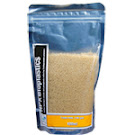
NPX BioPlastics; Nitrate & Phosphate Reducing Media
by Two Little Fishies

TMC V² Bio Fluidized Sand Bed Filters
Premium, second to NONE Aquarium Bio Filters, that with optional Oolitic Sand also maintains essential aquarium calcium levels, alkalinity, & electrolytes that are important to ALL marine & freshwater life
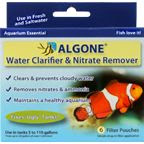
Algone Nitrate Reducer
Algone is an excellent product to utilize to lower nitrates, as enzymes in Algone break down proteins, carbohydrates and metabolic waste into insoluble complex structures

Aquarium Wonder Shell; ONLY Authorized full online seller
The most simple and proven effective way to maintain healthy mineral cations in your aquarium. Beware of parasite retailers online. ONLY AAP is authorized to sell the full line of FRESH Wonder Shells, both Medicated & Regular

SunSun HJ-1542 Aquarium Pump; replaces Via Aqua 1300
This pump replaces the Via Aqua 1300 and other copies such as by AquaTop as the Premier Power Head Pump for Aquariums, Ponds, Fountains, Wet/Dry Filters. This pump is submersible with Mag drive & ceramic shaft
ADVERTISEMENT
Labels: aquarium hydrogen sulfide, de-nitrification, freshwater, Hydrogen sulfide, nitrates, saltwater, sulfate reduction

<< Home


