
Our Facebook Page to Follow: Aquarium/Pond Answers Facebook
This is a unique resource for answers, help, & advice to aquarium and pond questions not found elsewhere; With regular posts & article updates.
In our research; we use aquaculture, horticulture, medical, & university research to compile many of our articles.Our Recommended Lighting for highest efficiency professional planted/reef aquariums: "AquaRay Lighting"
Betta Habitat; "Betta splendens" Wild Habitat

By Carl Strohmeyer-PAMR 40+ years experience
Updated 1/15/19
 I am writing this Aquarium Answers post/article to hopefully help with all the controversies around the internet and elsewhere about wild Betta habitat and requirements.
I would like to qualify this and state that as with many popular aquarium fish (such as Angels and Discus), the domestic versions are often adapted to the environment that they have been bred for. In other words, many angelfish are originally from low pH waters but are now commonly bred in higher pH alkaline waters.
In the case of Bettas, these amazing fish come from a Tropical Habitat that is known for drastic swings in water availability, clarity, parameters, and even temperature. This makes for a fish that is naturally uniquely adaptable to a variety of aquarium environments and is in part a reason for their popularity.
This said, often Betas are forced to adapt to conditions that would better described as just surviving as many take advantage of this fish' amazing adaptation abilities to extremes that they rarely face in the wild.
River Drainage Basins and natural environment
The Chao Phraya River drainage is seen in the central Thailand area of the map while the Mekong River Drainage habitat is seen in Cambodia and Eastern Thailand
The Betta is a native freshwater fish from Thailand (formerly Siam) and Cambodia (formerly Kampuchea). Most native Bettas originate from the Mekong AND the Chao Phraya River drainage basins. These drainages are mountainous with agriculturally productive valleys found in the upper regions.
The lower region contains alluvial plains that are highly productive for agriculture. The Mekong and Chao Phraya Rivers drains from north to south.
Monsoon weather dominates, with a rainy season lasting from May to October and supplementary rain from occasional westward storm depressions originating in the Pacific.
Temperatures range from 15°C (59 F) in December to 40°C (104 F) in April except in high altitude locations. The basins can be classified as a tropical rainforest with high biodiversity. The lower parts have extensive irrigation networks and hence intensive rice paddy cultivation.
These rivers have a pH of 6.9 ranging to 8.2 and the nutrient level is low. In the Lower Mekong and Chao Phraya areas the river is turbid, especially during the rainy season.
With the very wide temperature swings it is easy to extrapolate that a betta can and will do well in a reasonable warm aquarium aquarium/large-bowl environment that does not exceed the temperature extremes found in the wild. This is not to say that a heated stable environment is not better for a healthy Betta (remember this IS a tropical fish).
The pH, GH, and KH also have wide swings, to which the Betta has adapted, however keep in mind that rapid changes in pH can still harm or even kill a Betta and should be avoided.
It is also note worthy that the pH scale is logarithmic, so a full point change in pH is tenfold increase or decrease in pH.
Please see this article for more about this subject:
“Aquarium Chemistry, GH, KH, Electrolytes, and pH in Aquariums”
ADVERTISEMENT
The low water nutrient levels of these rivers lend themselves to a reducing Redox and lower nitrate levels, which means frequent partial water changes are important with bettas and if breeding on a large scale, a system in which the breeding sections are all linked to a large central system with a UV Sterilizer is also useful for both disease prevention and Redox (but not essential).
See this article for more about UV Sterilization:
How UV Sterilization Works in Aquariums and Ponds
Where to get: UV Sterilizer
Further Redox Info: Aquarium Redox
Being an anabantids, Bettas have a labyrinth organ in their heads that allows them to take oxygen directly from the atmosphere in addition to the oxygen taken from water via their gills which allows them to cope with the dry season in their monsoonal climate home.
All of the above environmental adaptation as well as breeding adaptation is why the Betta survives well in a small tank or even a reasonably sized bowl (with filtration), but also make no mistake about it the Betta merely survives the dry season and its harsh realities of water quality, so providing your domestic Betta a heated, stable, regularly maintained tank, with proper electrolyte levels (even if under 2 gallons) will go a long way in long term Betta health.
 Although these beautiful fish were not seen in Europe until the 1800's, they have been cultured and kept in Thai households since the 1200's.
Bettas common aquariums have undergone centuries of selective breeding and have become far more aesthetically pleasing than the original Wild Betta, these “Domestic” bettas have also been adapted to the small aquarium environments in which they are often bred.
In the wild Bettas generally grow to 6.0 cm (2.3 in.), however many are now bred up to 8.0 cm (3.5 in.) in length.
A Bettas diet in the wild generally consists of insect larvae such as mosquito larvae. It is noteworthy that many of these insect larvae feed themselves on green organic matter, so a proper diet should consist of food that duplicates the digestive contents of these larvae as well.
Betta fish can live for up to 8 years in the wild, but this is rare with all the risks they also face in the wild. However, the average lifespan of a Betta fish is closer to 4 or 5 years in captivity under good care in a filtered tank with good nutrition, and proper chemistry (which includes positive mineral ions, which many Betta Keepers miss the scientifically proven importance of these electrolytes).
In Summary;
Take from this article which you as per the facts when it comes to how you house your Betta, however please keep in mind that even with smaller containers; utilizing an "under bowl/tank" ambient heater such as the Hydor Mini Bowl Heater is still needed to keep the Betta water temperature at least 60F (higher is better), partial water changes, maintaining ESSENTIAL positive mineral ions, limiting exposure to life threatening or lifespan shortening ammonia/nitrite levels by cycling your Bettas Aquarium Bowl are ALL still important as with any other fish regardless of aquarium size.
Product Source: Hydor Heater Designed Specifically for Bowls
What is more subjective is the size of the container you keep your Betta in assuming all the above objective/factual qualifications are met.
The argument is often made that a Betta is more happy in a larger aquarium, unfortunately unless you can speak to your Betta, this is simply an opinion.
From my observations with Bettas in 10 gallon or larger tanks versus Bettas I have kept in bowls (2 gallons plus, NOT Vases!), I have noticed often much more lively Bettas in the Bowls than in the larger aquariums where by they often hide in just one corner and not utilize all the "extra space", especially when other fish are present. But then others may have different observations, which then makes this only anecdotal evidence.
Back to facts, since I have performed so many controlled tests utilizing many of my large multi aquarium clients (both large and small aquarium), literally in the 100s going back to 1978, I can state categorically that lifespan and disease resistance were NOT any more lengthened by the Bettas kept in containers over 10 gallons versus those that were in aquariums under 5 gallons.
WHAT WAS A FACTOR in lifespan & disease resistance was the environment these fish were kept in as per water parameters and feeding, as well as actual filtration, not necessarily the size of the tank (this is not to say you should keep your Betta in 1/4 gallon vase either).
These included:
- Ammonia/Nitrites near 0 at all times
- Stable pH (not so much the actual pH number)
- Nitrates under 40 ppm
- A constant supply of positive mineral ions which in turn results in healthy osmoregulation and a balanced Aquarium Redox (as well as an optimized rH), and NOT chase GH or worse seek to unnaturally lower the GH
 The points above are the FACTS, which includes in the controlled tests actually introducing diseases into their environment and those Bettas not kept in the optimum water parameters and fed the best diet much more often and quickly contracted the disease, even than those in larger aquariums that were of less than optimum water parameters.
The tests showed no differences in the 2 gallon bowls WITH sponge filtration versus the 10 gallon+ aquariums when water parameters and feeding were equal. AAP Hydro Sponge Filters work as well in bowl as they do in a larger aquarium and do to the large surface area, and soft patented surface area are 100% safe for Bettas.
You can then draw any subjective conclusions from there.
Sponge Filter Resource: AAP Premium Sponge Filters
More about Sponge Filtration:
Sponge Filter Use Information
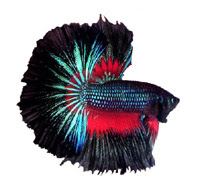

References
*www.unesco.org/water/wwap/case_studies/chao_phraya/chao_phraya.pdf
*Mekong/Lancang River
*Betta Care; Veiltail (VT), Plakat, Crowntail (CT), Halfmoon (HM)
Other Recommended Reference & Product Sites

Freshwater Aquarium Care; including bettas
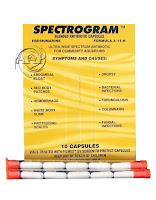
The most effective medication BAR NONE for the treatment of Columnaris in an aquarium when used as part of the four step program of Columnaris treatment.
A more synergistic combination than purchasing Kanamycin & Nitrofurazone separately.
AAP Spectrogram; Synergistic Kanamycin/Nitrofurazone
AAP Bettamax; Synergistic Nitrofurazone/Methylene Blue/Sulfas Full Spectrum Treatment for Bettas

Everything you need to know about Sponge Filtration

Atison's Spa Clear; Indian Almond Leaf Conditioner
Clear Betta Spa contains wild almond leaf extract to simulate the natural environment of the native soft water fish.
Other natural botanicals, including Yucca extract, help control ammonia, reduce stress and maintain cleaner water.
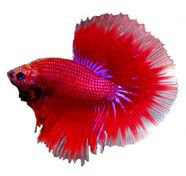
Betta Specifics, Information

FISH AS PETS
Fish as Pets with articles & commentary of Interest to the Aquarium Hobby

A great forum for all your fish questions
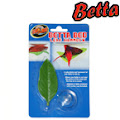
ZooMed Betta Hammock
Allows your Betta to rest near the surface of the water just like they do in nature.
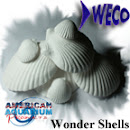
Wonder Shells; Regular & Medicated
Provides a constant supply of ESSENTIAL mineral ions for Bettas and other fish.
These unique Wonder Shell Mineral Supplements are sold EXCLUSIVELY at American Aquarium Products

Sanyu Betta Gold Premium Betta Pellets
* To reinforce the color combination of bettas by high percentage of natural color pigment.
* Strongly outline the original color combination of bettas
* It contains all the nutrition to keep the betta in good health
* Extremely stable vitamin C helps promote effective growth by reducing stress and reinforcing resistance
* A quality Betta food at a better value.
ADVERTISEMENT
Labels: Betta, Betta Aquarium, Betta Bowl Size, Betta Care, Betta Habitat, Betta Keeping, Betta Tank, Chao Phraya River, Mekong River, Plaket

<< Home


