
Our Facebook Page to Follow: Aquarium/Pond Answers Facebook
This is a unique resource for answers, help, & advice to aquarium and pond questions not found elsewhere; With regular posts & article updates.
In our research; we use aquaculture, horticulture, medical, & university research to compile many of our articles.Our Recommended Lighting for highest efficiency professional planted/reef aquariums: "AquaRay Lighting"
Aquarium & Pond Filter Media, Material; Mechanical, Bio, Chemical
By Carl Strohmeyer & Steven Wright
Updated 5/19/20
Aquarium Filter Media;
Types (Carbon, etc.), Capacities, Replacement/Care and more
(This applies to ponds as well).
Including:
In this article I will discus three basic filter media types and subtypes of these.
These filter media types are Mechanical, Biological, and Chemical.
As well I will briefly describe care and replacement of these filter mediums in each section
Filter Media Order:
As a generalization, when used in a canister, sump, or any other filter type where there layers of different filter media types, you would want to go from coarse to fine with most chemical filter media (carbon, Purigen, Bio-chem pure, etc.) near the end of the water pass through this media along with the fine filter media.
With Bio media such as Volcanic Rock, I often place this first as both a coarse filter media AND bio filter media. More fine bio filter media such as aquarium Matrix (not pond Matrix), I will place just after more coarse mechanical filter media.
For more filtration information, including canister filter media diagrams, please visit this article:
AQUARIUM FILTRATION; how they work, advantages and disadvantages of each
MECHANICAL:
This media is primarily for trapping particulates in the water from large to small. In a canister filter or similar this should be the first phase of filtration (although many aquarists have done well with ceramic bio media used a coarse filter media that is both mechanical and biological provided it is rinsed in de-chlorinate tap water regularly.
Sub types include:
FINE FILTER MEDIA
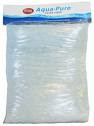 *Basic aquarium floss or fiber which is a finer filter media.
In canister filters I will often use this to make a "sandwich", placing carbon or other chemical media in the middle for the final stage of filtration.
 *Micron Cartridges for Filters such as Magnums or Aquarium Cleaning Machines. These cartridges can often filter down to diatom size and are excellent for cleanup, green aquariums, cloudy aquariums, even parasite infestations.
 *Poly Filter Pads; similar to micron cartridges in their abilities (although usually not as efficient), but are excellent for canister filters.
As with filter floss, in canister filters I will often use this to make a "sandwich", placing carbon or other chemical media in the middle for the final stage of filtration.
 Regular Poly Filter Pads (not to be confused with THE Poly Pad, see later under chemical filter media) such as this one to the left, which is effective for trapping very fine particulates, free floating algae, and even some larger molecules; I use these myself and recommend them for the uses I just mentioned, I just do not recommend these for of ammonia, phosphate removal, etc.
One more use of these types of pads is if used in an easy to change location such as a HOB or Wet/Dry filter they can be useful for lowering nitrates as well as long as they are rinsed every 1-3 days.
How this works is this filter material will trap fine organic particles BEFORE going through the nitrogen cycle which would otherwise result in nitrates.
The key is regular rinsing in CHLORINATED water so as to prevent the formation of nitrifying bacteria that would break down organics resulting in higher nitrates. This is similar to how the micron cartridges work (except on a much smaller and less efficient scale) in cleaning filters such as the Aquarium Cleaning Machines

These Poly Pads are often an excellent choice for a Pre-Filter in wet/dry filters that have a flat "spreading basin" design with small holes for water to percolate through.
See the picture to the left.
ADVERTISEMENT
MEDIUM FILTER MEDIA;
*Ehfi Synth by Eheim is an example of an excellent medium mechanical filter media.

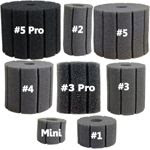 *Sponge and Foam Media; sponge and foam inserts/filters fall into both mechanical and biological categories. Their effectiveness can vary in both mechanical and bio abilities.
The Hagen foam inserts pictured here is more coarse than some sponges (foam) and would be classified as medium mechanical media. They are not very dense and do not have as much bio capacity though.
The Hydro Sponge line (replacement sponges pictured), has patented sponges of different porosity. The reticulated sponges found in the Filter Max #3, Hydro Pond, and Hydro Sponge PRO is both dense (for good bio filtration) and medium in mechanical ability.
The smaller model sponges (such as the Filter Max #2) are actually a somewhat fine filter media comparable to filter fiber however with much more bio capacity.
As well, these do hold more debris per square centimeter and thus require more rinsing over the high flow rate reticulated sponges due to their fine mechanical filtration.

What is also noteworthy as to the patented AAP Hydro Sponge line, is as an example, standard/regular patented sponges are so much more porous than competing Chinese knock-off imports, that these can hold as much as FIVE times as much debris as than these lessor filters and actually more than similar sized HOB filters (making these a much more effective and cost efficient filter).
So when someone tells you a sponge filter is not very good for mechanical filtration, likely this person has only used a commonly sold Chinese knock-off sponge filter!!!
 Hydro Sponge Filter are also excellent for use in certain designs of wet/dry filters as a pre-filter an/or pump pick-up filter.
Mounting these filters is easy (you only need the replacement filters, not the entire filter). You would insert a 3/4" pvc pipe that is drilled and capped into a #3 Sponge Replacement or similar and let the water percolate through the sponge media.
See the picture to the left which display both uses of a sponge filter in a wet dry system.
Product Resources:
*Hydro Sponge Filters, & Sponges
*Filter Max; Sponge Pre-Filters
*HydroPond Pond & Aquarium Sump Sponge Filters
 *Cleaning pads as filter media; I have used the glass aquarium cleaning pads by Lees Aquarium Products for a medium filter pad they work great and are economical! I simply purchase the largest size I need and then cut to fit.
As well these cleaning pads are excellent for developing nitrifying bacterial colonies and thus perform bio filtration as well after 4-8 weeks, I generally use these in HOB Filters in from of the more fine mesh cartridge or in a canister filter in a similar placement manner.
*You can also use a medium grade gravel or volcanic rock as a medium filter media for canister filters (see picture below for volcanic rock)
COARSE FILTER MEDIA;
 *Ceramic Rings; As stated earlier ceramic bio media can be used for coarse filtration.
 *Coarse gravel or better volcanic rock also makes an excellent coarse mechanical filter media (the volcanic rock is also an excellent bio media as well).
MECHANICAL FILTER MEDIA CARE:
As a generalization, most fine filter media (such as filter wool, polyester filter pads, etc.) should be changed when dirty.
HOWEVER often many poly pads that are well made (meaning they do not fall apart readily), can be rinsed or even bleached and used repeated (soaking bleached filter pads in water with 2-3 x normal tank dose of water conditioners such as Prime will remove the bleach once finished). I haven found many pads, such as found in the SunSun/AquaTop Canister Filters can take few rinsings, even bleachings before needing to be disposed of.
This even true of some basic HOB filter cartridges (although the Whisper Filter cartridges do not hold up much to rinsing).
Micron cartridges also rinse/bleach repeatedly well.
Medium and coarse filter media such as sponge or coarse polyester filter pads generally rinse very easily and only need to be changed when these pads (or similar) no longer hold together well.
Generally these rinsings or changes of mechanical filter should be performed once every 2-4 weeks, however if these are very dirty at the time of cleaning and are essentially impeding water flow may indicate more frequent changes/rinses are necessary
BIOLOGICAL:
This is filter media designed to allow the growth of nitrifying (and sometimes de-nitrifying) bacteria to remove nitrogenous wastes such as ammonia and nitrites. This is one of the primary goals of aquarium filtration!
Nitrifying (removes ammonia & nitrites):
 *Ceramic Bio Rings which go by many names are efficient bio filter media that have a capacity of 20,000 square foot per gallon.
These however clog easily and need a monthly rinsing (in de-chlorinated water) to perform best. These have deep pores that can hold nitrifying and some de-nitrifying bacteria.
Ceramic Bio Rings are popular with canister filters, as well ceramic bio rings can be used in HOB filters, and even wet/dry filters.
Where to purchase: *Ceramic Bio Rings
Due to the high volume of potential nitrifying bio bacteria in a small space, this is a desirable product when space is at a premium (especially when compared to bio-balls).
However volcanic rock has similar properties and a rougher surface, so there are fewer tendencies to develop slime over the media and clog, which is the one negative of ceramic bio media.
The Ceramic Bio Rings are for aerobic (nitrifying; removal of ammonia & nitrites) bio filtration only, not anaerobic de-nitrifying (removal of nitrates).
 *Bio Rings/Balls; these are popular in Wet/Dry systems where their high surface area (no pores) are exposed to oxygen rich air.
Bio Balls can also be used in HOB and built in Wet/Dry filters effectively, although they will often be exposed to less oxygen in these systems.
Bio Balls generally have from 100 to 160 square feet per gallon and are generally much more economical than ceramic rings when large quantities are needed, such as wet/dry filters.
However, bio balls are purely for aerobic nitrifying bacteria as there are no deep pores for the formation of de-nitrifying (nitrate removing) bacteria.
This makes bio balls a poor choice for marine aquariums despite the popularity of bio balls in many marine systems over the years (although thankfully many have realized the “nitrate factory” potential of bio balls and saltwater use is rare nowadays).
 *Bio-Chem stars are made from a porous polymer in a process that forms a very fine 50-70 micron internal pore network, this pore size is optimal for the growth of beneficial bacteria, including nitrifying bacteria that remove toxic ammonia and nitrite.
Bacteria grow within the star, colonizing the entire structure.
One Bio-Chem star has 33 times more bacteria growing area than the average bio ball, with 20 stars able to support up to a 100 U.S. gallon (379 L) aquarium.
The stars can also be used to float on the water surface in external power filters.
The Bio-Chem Stars are for aerobic (nitrifying; removal of ammonia & nitrites) bio filtration only, not anaerobic de-nitrifying (removal of nitrates), however these are one of the better products for this use based on my extensive ‘measured’ use of these ‘stars’ over the years.
Where to purchase: Filstar Bio Chem Stars
 *Sponge and Foam Media; Sometimes incorrectly thought of only as a mechanical filter media (or the opposite), however sponge filter media which can vary in capacity per square foot depending upon the type and brand is one of the better bio medias especially when price and space are considered. I have use sponge filter media such as the Hydro Pond #4 for pre filters on pumps in sumps for refugiums or similar filters with very good results.
The sponge is also how several HOB filters utilize nitrifying bacteria such as the Aqua Clear or Whisper (with the sponge insert). In fact I did several experiments several years back comparing sponge filters and sponge equipped HOB filters to the much hyped bio wheel and the sponge media one the tests (which at the time caught me by surprise as I was a believer in the bio wheel hype, not that the bio wheel does not work)!
Product Resource: Hydro Pond Pre Filters
Please see this article about bio wheels: “Do Bio Wheels really Work”.
The bottom line is most high grade sponge filter media such as that used by Hydro Sponge and Aqua Clear are almost as efficient a bio media as many other types such as bio rings and better than bio balls and sponge media has the advantage of ease of rinsing which is a plus over some other bio media.
Please read this article for more information about sponge filtration: “Sponge Filtration, How Sponge Filters Work”
Nitrifying AND De-Nitrifying (Removal of Nitrates as well via Anaerobic Bacteria):
It should be noted that the flow rate of water may need to be adjusted for the cultivation of de-nitrifying bacteria in the products listed below in this section of the article (dissolved oxygen levels also have an effect as well).
As a generalization, higher flow rates will require a larger outside surface area for anaerobic bacteria to form deep inside the media (as oxygen permeating the media will not allow the proper cultivation of this bacteria), so with many products you will find it necessary to find a “sweet spot” as to flow rate since size of the media cannot be controlled (except for maybe taking a mallet to volcanic rock or live rock crumbles).
Please also reference this article:
Aquarium or Pond Hydrogen Sulfide Production & Nitrate Removal
*Cured Live Rock Crumbles; this has been VERY effective for me in canister and wet/dry systems (in place of bio balls or ceramic bio media), rock piles, Refugiums, mud filters and other marine systems for both aerobic (nitrifying) and anaerobic (de-nitrifying) bacterial functions. Generally I use live rock pieces about 3-4 cm in diameters.
 *Volcanic Rock (More Accurately; Lava Rock); I already mentioned this above for mechanical filtration, however I will mention it again as it MAY BE very porous and makes an excellent bio media for aerobic and even anaerobic (de-nitrifying) bacteria for both fresh and saltwater.
I have generally used smaller pieces (large pieces often are not very porous if at all) of volcanic rock as compared to live rock crumbles; 1-3 cm.
I was the originator of the idea to utilize Lava/Volcanic Rock as both a bio filter media and mechanical filter media in aquariums (not so for ponds though).
It all started in the 1980s when I was looking at a better way to protect pond pumps from debris that was clogging the pump quickly and other typical filter media pads, sponges, etc was not working.
I started with regular driveway type rock, then thought Lava Rock might be better as suggested by another professional in the industry (which it was).
I later noted that bio filtration was improved too while utilizing the Lava Rock and worked at finding better Lava Rock that would work better yet and work in aquarium systems as well.
Well into the 1990s I tested and improved the size and type of Lava Rock I used for both bio nitrification and de-nitrification. While not the best bio filter media, correctly sized and more porous lava rock has performed better than bio balls and ceramic media when used in a closed contained filter environment as BOTH a mechanical and bio filter media.
 BEWARE that not all volcanic rock is the same (admittedly this is a VERY GENERIC term), in fact it varies greatly since the type of geological volcanic reaction varies greatly. breaking it into the 1-3 cm. sizes makes a difference too. So be careful of "cut & paste" web sites with little to know practical and in depth experience stating otherwise!!
Unfortunately there is an anecdotal website as well as an otherwise excellent YouTube video that makes the mistake of comparing apples to oranges. This mistake of comparing low quality/poorly sized Volcanic rock to proper sized/porous rock is similar to the many websites that review UV Sterilizers based on Junky Chinese 'Category C/ UVs instead of High Output 'Category A' UVs.
An of example of more porous Volcanic Rock compared to even more porous Matrix (which can be demonstrated when breaking open after use and finding water inside; if it is not wet inside, you do not have porous volcanic rock which much of the volcanic rock used is not).
See picture to the right:
Further Reading: What Is the Composition of a Lava Rock?
Care is simple, just lightly rinse when any organic mulm/detritus builds up in the pores of the rock, but do not over rinse so as to destroy any anaerobic bacteria deep inside the volcanic rock. Very rarely does volcanic rock need replacement, usually I just add-to already established volcanic rock in any filter and at most replace 10-20% at a time if truly necessary due to non-rinsible mulm build-ups.
The advantage of Lava/Volcanic Rock is price as compared to other aerobic/anaerobic bio media of similar abilities.
The disadvantage is that Volcanic Rock is that Volcanic Rock is not as consistent in size both of the rock itself and in pores within the rock when compared to more premium products such as Matrix, Aqua Clay, or Bio-Home which results in less bio filtration in a given volume of media.
This said when you consider how much cheaper volcanic rock is and for large volume applications such as pond veggie/bog filters or aquarium sumps, volcanic rock in the end is often what I would recommend since for for $25 or less you can get 10 lbs or more (versus 11 lbs of Bio Home for $72+).
Over all though, especially if you are on a budget or need large volumes of bio media that can perform both aerobic and anaerobic bio filtration, Aquarium/Pond Volcanic Rock is hard to beat.
With the exception of Matrix and BioHome, properly sized and grade volcanic rock is often superior to other bio filter media such as bio balls and even superior to ceramic bio media in bio-bacteria capacity, often at a fraction of the cost!!
Lava/Volcanic rock is excellent in pond filters (as already noted) as well as in marine aquarium systems!
Product Source: Volcanic Rock from American Aquarium by Carl Strohmeyer
Finally, beware of the many copycat "cut and paste" websites such as aquariumfish.net that claim experience using Volcanic Rock as a filter media for ammonia, nitrites, & nitrates.
Despite the implications that they have experience using this product, these websites only started selling or recommending after reading of material by Carl Strohmeyer when published on the Internet and are now attempting to capitalize on his work.
The facts are Carl S. has been using and experimenting with this product since the early 80s and has the most experience as to what does and does not work.
 Matrix; Another product I have used with good results is SeaChem Matrix for both ammonia/nitrite removal (nitrification/aerobic) & nitrate control (de-nitrification/anaerobic).
What sets Matrix apart from other products such as Eheim Substrate that also can perform nitrifying and de-nitrifying functions is pore size.
Eheim Substrat Pro and JBL MicroMec which are similar products (in both cases, sintered glass) and are claiming larger specific surface areas than for SeaChem Matrix, however there is a second consideration, and that is the size of the pores in the medium.
Generally, with very large pore diameters, we have smaller specific surface area, so that is not good. This generally rules out pores above 10 microns in diameter.
But we can go too far in the other direction as many products such as Eheim (Substrat Pro) and JBL (MicroMec) have done.
If we have a very large number of very, very small pores, then our specific surface area number will be phenomenal, but the medium will not work very well as a biological medium.
This is due to physical limitations, specifically too small a volume to support bacterial growth, and the decreasing efficiency of fluid transport (necessary to carry nutrients to the bacteria and waste away from the bacteria) with very small pore sizes.
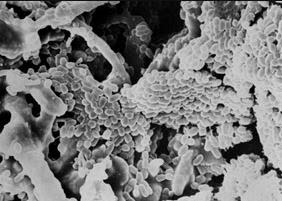 Surface area measurements indicate that SeaChem Matrix contains nearly 10 times the specific surface area of Substrat Pro, and more than 20 times the specific surface area of MicroMec. Practically all the specific surface area of both Substrat Pro and MicroMec are in the range of pore diameters to be biologically useful (especially anaerobic), while some of the surface area of Matrix is in pores that are reserved for physical and chemical processes, not biological processes.
The picture to the left displays bacterial colonies on the internal and external surface area of Matrix.
Similar to Matrix and often sold by less knowledgeable retailers is Matrix Carbon.
While it is an excellent product at first consideration, the problem is the fact that carbon needs to be changed at certain interval while the Matrix generally rarely if ever needs to be changed. While you could simply let your carbon part of the mix get exhausted, this begs the question why not use just Matrix in the first place which is a much better bio filter media than exhausted carbon (which could also potentially add back toxins that have been absorbed).
Product Reference: SeaChem Matrix from AAP

DeNitrate; This is another older SeaChem product similar to Matrix that I have used quite extensively
However my results when compared to Matrix are much less favorable
Not only does DeNitrate do a lessor job in removing nitrate, but it also does not work well for aerobic nitrification in removing ammonia or nitrites as Matrix will.
Unfortunately, as with Matrix Carbon, many less than knowledgeable retailers sell this older product instead of Matrix (especially some of the larger online resellers).
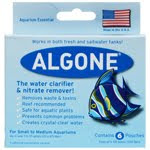 Algone has been around for some time now, in fact I have used this product for many years with my aquarium maintenance companies with good (& measured) results for both Marine/Reef and freshwater aquariums.
Algone works via nitrate fixating microorganisms which incorporate excess nitrogen into the cellular mass, while bioactive enzymes assimilate nitrogen from the water column. The result is lower nitrates, removal of dissolved organic and inorganic pollutants, toxins, and odors.
Where to purchase:
Algone Water Clarifier & Nitrate Remover

NPX BioPlastics is a Nitrate & Phosphate Reducing Polymer Media developed by by Julian Sprung that provides a time-released source of food for bacteria that can quickly assimilate nitrate and phosphate.
This product works by anaerobic zones developing within the Spheres/ pellets, thus promoting de-nitrification there-in.
As well, when "churned" in a Fluidized Filter or Reactor, bacteria develop on the pellet surfaces and slough off, then these bacteria can be removed with a protein skimmer, Purigen, or serve as planktonic food for corals, clams, sponges and other filter-feeding invertebrates.
 When combined with a Fluidized Sand Bed Filter, which are far and away the most efficient bio filter when compared pound per pound of filter media (including over otherwise excellent sponge and other bio filters), this can be a very effective and complete bio filter.
Most users have found this product superior to Vodka Dosing Methods to reduce Nitrates & Phosphates in Marine Aquariums (freshwater use is possible with the use of SeaChem Purigen in a separate filter).
Where to purchase:
*NPX Bio Plastics Nitrate, Phosphate Reducer
*TMC 3rd Generation Fluidized Sand Bed Bio Filter


*AquaClay; This product has some popularity in Europe, however currently high shipping costs/volume requirements are keeping it from North America.
Current tests with this product show much promise, especially in nitrate reduction capabilities
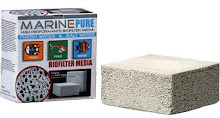 *MarinePure Block; This a relatively newer offering from Hagen that has become quite popular with Hagen's huge marketing budget behind it.
This product can lower ammonia, nitrites, & even nitrates when generally used in a sump.
I however do not quite believe all the claims, in part just my own experience with Hagen where marketing and getting a product in as many stores as possible always seems to come first (think Fluval Lighting as per a product marketed as top notch which is anything but).
Opinion here aside, my experience has shown better results over blocks or similar with a mixed bed of something like Pond Matrix, Regular Matrix, Crush Coral Crumbles, or even Lava Rock.
The problem with a block is there is much flow by which in the end results in lower efficiency of DOC removal (this is not to say these do not work, but just with my lighting comparison in the previous paragraph, just less efficient)
Another issue includes the fact a block will not help with mechanical filtration which may not be important to some, but my experiments with high bio load ponds has shown this can make a BIG difference in effectiveness.
Finally; There is the issue of elevated levels of aluminum with prolonged use which has proven to be detrimental with leather corals & likely other aquarium inhabitants over time too (resulting in skeletal deformities). High or low pH can make aluminum issues more quickly a problem too.
BIOLOGICAL FILTER MEDIA CARE:
Bio filter media should ONLY be rinsed in used aquarium/pond water (then dispose of the water) or de-chlorinated tap water (non chlorinated well water is OK too).
Even then excessive rinsing can destroy some nitrifying bacteria, so do not worry about rinsing until the rinse water is perfectly clear.
Generally bio filter media such as stars or ceramic bio rings only need mild rinsing in used tank water or de-chloritated water ONLY about every two months.
However bio filter media such as sponges that double as mechanical filters should be rinsed every four to two weeks and sometimes even more frequently under heavy bio loads.
Even more care should be given to de-nitrifying bio material (such as Matrix, Volcanic Rock, Live Rock Crumbles, etc., as the aerobic bacteria are readily destroyed in the oxygen rich environment a rinsing would provide.
My suggestion with this media (including media that provides both nitrifying and de-nitrifying bio capacity) is to only rinse 50% or less of any such media at a time and provide 2-4 weeks before rinsing the other half.
Products such as Algone or Bio Plastics essentially need NO cleanings/rinsings
CHEMICAL (Absorbing):
These are filter media that absorb or bind chemicals and toxins within the media.
Sub Types:
 *Carbon; a very popular chemical filter media that is often over used in established aquariums and sometimes ponds as well.
A healthy established aquarium (fresh or salt) with regular water changes generally needs little carbon.
In newer aquariums I will often use about 1-3 teaspoons per 10 gallons. Carbon will NOT remove or absorb ammonia, nitrites, or nitrates.
 There is controversy in what essential minerals carbon will absorb or what activated carbon will or will not absorb in general. I will state based on my own experience and scientific evidence that carbon has many uses in aquariums/ponds but is also over used or incorrectly recommended.
Although I use little carbon in my established healthy aquariums and ponds, I disagree with those that state it should not or rarely be used (based on some false assumptions of what carbon removes or adds to water). On the flip side I also disagree with those that make carbon the answer for water quality issues such as nitrates for which carbon does not remove.
Activated Carbon is very useful for removing most medications after or between treatments (this is where I strongly recommend its use), although even here, carbon does not remove most copper formulations effectively.
Carbon Resource:
Nirox Carbon
Here is an incomplete list of what carbon does and does not remove based on a University Research Paper;
What Carbon CAN remove:
Inorganic Contaminants:
*Arsenic Complexes
*Chromium Complexes
*Mercury (Hg+2) Inorganic
*Organic Mercury Complexes
Organic Contaminants:
*Benzene
*Endrin
*Lindane
*Methoxychlor
*1,2-dichloroethane
*1,1-dichloroethylene
*1,1,1-trichloroethane
*Total Trihalomethanes (TTHMs)
*Toxaphene
*Trichloroethylene
*2,4-D
*2,4,5-TP (Silvex)
*Para-dichlorobenzene
What Carbon CANNOT remove:
*Microbes,
*Sodium,
*Nitrates, nitrites, ammonia
*Fluoride,
* Hardness.
*Lead and other heavy metals are removed only by a very specific type of AC filter
For much more about the use of Carbon in aquariums/ponds, please see this Aquarium Answers Article:
Activated Carbon
Please reference this study for more about carbon:
www.ag.ndsu.edu/pubs/h2oqual/watsys/ae1029w.htm
*Resins, ion exchangers, synthetic polymers, or adsorbents; there are many resins (not all are safe for both freshwater and saltwater) from phosphate removing resins to nitrate sponges.
My results are generally good with the main issue being expense as most of these resins are very expensive to use in the quantity needed for say nitrate removal.
Hagen Green-X (Phos-X) is a product that I have used successfully in marine and freshwater aquariums.
Green-X removes phosphate, nitrate and nitrite and it relatively inexpensive when compared to similar products. Unfortunately I believe that Hagen has discontinued this product.
 Another popular resin is Purigen.
SeaChem/AAP PURIGEN is a premium synthetic adsorbent made up of unique macro-porous synthetic polymer that removes soluble and insoluble impurities from water at a rate and capacity that exceeds all others by over 500%. It is not a mixture of ion exchangers or adsorbents.
Purigen controls ammonia, nitrites and nitrates by removing nitrogenous organic waste that would otherwise release these harmful compounds.
Purigen is also often effective in tannin removal in aquariums or ponds (that causes yellow water) when carbon and other products are not (especially when combined with Matrix).
Purigen’s impact on trace elements is minimal.
SeaChem Product Resources:
SeaChem Purigen
Bio Filter Matrix
Purigen can also be regenerated. Soak in a 1:1 PLAIN bleach:water solution for 24 hours in a non-metallic container in a well ventilated area. Rinse several times. An option to make sure bleach is removed for freshwater use is to soak for 4 hours with a solution containing 2 tablespoons of low pH buffer per cup of water (Discus Buffer, Neutral Regulator).
Prime or similar CANNOT be used as it will degrade the effectiveness since both bleach & Purigen are Redox Oxidizers, while Prime and most similar water conditioners are Redox Reducers, thus degrading the oxidizing capabilities of the Purigen.
It is noteworthy, that since Purigen can affect Redox, and although Purigens affect on Redox is not as severe as products such as Boyd's Chemi-Pure or "THE" Poly Pad, the addition of mineral cations such as the use of Genuine AAP Wonder Shells while using this product is greatly encouraged (please note that a fresh Wonder Shell works best for this as they lose their Cation charge over time and most sold by clearance and non authorized sellers are NOT fresh)!!
As well, use of Purigen can throw planted aquarium mineral & Redox out of balance and worsen any algae issues.
For these reasons, often it is best to utilize Purigen as a "cleanup" scavenging/oxidizing product similar to how one would utilize Ozone (although generally ozone is best contained in a skimmer). In heavily planted aquariums or if the aquarium water does not need polishing, the use of Purigen is generally not called for and can sometimes cause more harm than good to fish and plants (such as burning of plant leaves from over oxidation; reference: Aquatic Plant Central; Seachem Purigen and natural planted tanks)
Where to get: Genuine Fresh AAP Wonder Shells
 *Boyd’s Chemi-Pure; this is a popular product that I must be missing something about it as I have used it several times in my maintenance business and have never quite seen this product meets its claims (in particular marine aquariums).
In fact in marine aquariums I have seen very unstable pH when this product is used.
I also have some problems with the claim by the manufacturer of “NO CLEANING - Necessary for health of fish”.
I personally feel very strongly about regular water changes even with products I recommend. This all said, I do know persons in this hobby whom I respect who like this product, so I will leave it at that.
Another key point is that the Aquarium Redox balance is substantially affected with the use of this product, so use with caution or add mineral cations to negate this side effect (although the Chemi-Pure may still yet over ride these mineral Cations similar to how water from a home water softener over rides mineral blocks).
Chemi-Pure Green (along with Blue) are a newer offering of this decades old popular product, with subtle changes tweaked toward planted aquarium keepers. This product MAY temporarily help plants out compete algae & remove medications & toxins (however as with Purigen, it can also make algae issues worse by throwing minerals & redox out of balance).
Despite the claims, this product removes many elements and mineral Cations NEEDED for not only long term fish health, but plant health as well. My long term testing of the original product showed pH drops and very unhealthy Redox/rH levels after long term use. Even the product claims; "Use increases ORP/redox potential".
Why would you want to increase long term oxidative stress???
In conclusion, this product along with "Blue" & original might have their place for short term use, but I strongly caution against long term use based on my long term experience/testing as well as the known science of a healthy aquarium Redox.
Reference:
The importance of a Balanced Aquarium Redox for Fish Health
 *"THE" Poly Pad and similar pads by Boyds claim to remove heavy metals such as copper as well as phosphates, ammonia, and nitrites as well as certain organic via proprietary matrix of synthetic poly fibers.
My use of these has not quite stood up to the claims of this product as per phosphates, and ammonia/nitrites, however I have seen improvements in heavy metals (especially copper) and some organics.
This said, most dense poly fiber pads have similar results as to organics and as per certain element removal, I would use with caution especially in planted aquariums or in aquariums where fish seem to be struggling with constant health issues (as well as Boyd’s Chemi-Pure).
For those that use this product, I am not saying that it does not work, however the claims of what this product can do are just too broad and my test results do not mesh with claims and if all the claims were true you would deplete a tank too much of essential elements (that are important during times of stress such as new fish, shipping, etc.) and you would have no need for bio filtration (which of coarse is not true).
The best use of this product is to absorb ammonia, especially in temporary holding tanks such as during a move.
However even this use should be done with the knowledge that the Poly Pad will negatively affect the Redox Balance which in turn can induce stress in fish. Sometimes not enough stress to cause an issue, but also as per my experience enough stress that at the very least can make the fish more susceptible to disease.
The simple answer is to balance the Poly Pad with Redox reducers that that steadily add mineral Cations such as the original AAP Wonder Shell. Or better if you are struggling constant fish health issues and/or Redox/rH issues, simply cease using their often over hyped products (often by popular Youtubers that should know better).
 *Bio-Chem Zorb; this product by API provides a home for colonies of nitrifying bacteria in both fresh and saltwater aquariums. Space-age porous polymer allows for rapid transfer of oxygen and water.
Bio-Chem Zorb is made from a research grade carbon/resin in a flow-through nylon pouch.
It removes aquarium pollutants, improves oxygenation, and the manufacturer claims it will not remove trace elements from saltwater (which I question this claim based on Redox tests, and although a good product, use of mineral cation supplements should be used with this product).
I have used this product with moderate success. I strongly recommend the use of additional mineral cations such as Wonder Shells with this product.
Where to purchase:
*AAP Wonder Shells; Mineral Ion Replacement Blocks
*Filstar Bio Chem Zorb
The bottom line as to the above Ion exchangers, resins, synthetic polymers, etc. is that all seem to have at least some negative impact on a healthy Redox balance, with Purigen being the most minimal, so care as to the addition of mineral cations or other methods of improving Redox Balance (such as UV Sterilization) should be employed when using this products.
If a UV Sterilizer is employed, it is essential for optimum effectiveness that the UV Bulb, Lamp is changed every six months.
References:
*The Process of UV Sterilization
*UV Sterilizers
*UV Bulb Replacements
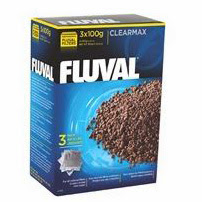
*Fluval ClearMax;
Fluval ClearMax is a science grade resin designed to adsorb phosphate, nitrite and nitrate.
ClearMax uses ferric oxide to control phosphates, which although effective, can be a problem if not removed when treating aquariums, as many medications/treatments can cause the ferric oxide to leech out to toxic levels.

*SeaChem PhosBond;
This is an excellent product for both phosphate and silicate removal in fresh & saltwater aquariums, including reef aquariums.
SeaChem's PhosBond is a new product and a very innovative one in my opinion as it synergistically encapsulates ferric oxide with aluminum oxide, thus making for a much safer product than products such as ClearMax. This combination combines the safety of Aluminum oxide with the effectiveness of ferric oxide in removing phosphates from fresh or saltwater aquariums.
PhosBond is more effective than aluminum oxide products for phoshate removal, but not as effective as pure ferric oxide products (but close)
| Phosphate Removal Properties: | PO4 bound (mg/g) |
| Aluminum Oxide | .87 |
| Ferric Oxide | 1.41 |
| PhosBond, GFO & Alumina Oxide hybrid | 1.19 |
Recommended Product Resource: SeaChem PhosBond from AAP


*AmmoChips (AmmoCarb, Zeolite); this is only safe for use in freshwater aquariums as salt in much quantity will leech out the ammonia it absorbs (use with small amounts of salt under 1 tablespoon per gallon is OK).
This is a useful product, especially when combined with carbon in freshwater aquariums such as AmmoCarb for new aquariums, overcrowded aquariums, or when used in conjunction with carbon after medication treatment that may kill off some nitrifying bacteria such as Erythromycin.
I generally use this product over straight carbon when I even use carbon in freshwater (the keyword is even use as I do not often use carbon in healthy freshwater aquariums).
Whether you use straight Zeolite (Ammochips) or Zeolite/ carbon combinations, the exhaustion of the Zeolite from ammonia absorption can vary considerably based on your aquariums bio load and the health of your tank’s nitrifying bacteria (a healthy nitrifying colony will remove some of the ammonia before the Zeolite absorbs it).
Testing for ammonia and the end product; nitrates are one way of gauging exhaustion of your zeolite. Generally changing your zeolite once every two to as long as six weeks has worked in my experience.
Do not leave zeolite in your aquarium/pond indefinitely as it still can eventually leach ammonia back into the water.
Where to purchase:
*AmmoCarb; Zeolite with Carbon
*AmmoChips; Zeolite only
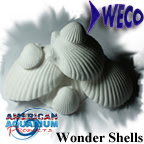 *AAP Wonder Shells; a poorly named product that even though it’s name implies more than it delivers is an excellent product (more so than Chemi Pure in my experience). These are also as much or more a Water Conditioner/Treatment than a chemical filtrant.
Although this product can be placed in your filter like other media, this is not best as it will dissolve to rapidly. Fresh AAP Wonder Shells are best placed on the bottom of the aquarium.
What this product does is it adds several trace elements (electrolytes) such as calcium while it dissolves according to natural water chemistry. If used fresh, only a small fraction of an AAP Wonder Shell needs to be used to obtain the mineral Cation benefits (beware that most sold online, in particular via Amazon are clearance product and not fresh, so the mineral Cation charge is often quite degraded).
The results have excellent in many aquariums, especially livebearers, goldfish, betta, African cichlids, and Discus (and many more).
I recommend reading this article for more about how a Wonder Shell may benefit your aquarium:
*AQUARIUM CHEMISTRY; Why Calcium and Electrolytes are Important
Product Resource: AAP Premium Wonder Shells
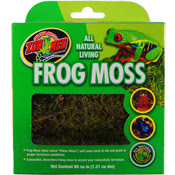 *Water Softening Products; Peat, Peat Pellets, Indian Almond Leaves, or Pillow Moss are popular for maintaining a lower pH in Amazon River or similar aquariums.
As with Wonder Shells, these can only loosely classified as a chemical filtrant, as these are as much or more a water treatment.
Of the Indian Almond Leaf products, I prefer the now discontinued Bio Lif which is made from almond leaves which naturally lowers pH (albeit slowly) as well as aid in the control of some pathogenic anaerobic bacteria (such as Aeromonas).
All these products tend to yellow the water, so keep this in mind, however this a very natural color for lower pH waters.
Pure Almond Leaves or Pillow Moss can be combined with Wonder Shells or SeaChem Replenish for an excellent over all treatment for essential mineral cations and natural water softeners and when used with Wonder Shells.
The combination of Pillow Moss and Wonder Shells exceeds Atison's Spa for this use as it supplies a better water softening properties and more importantly, a CONSTANT supply of mineral cations.
Where to purchase:
*Atison's Betta Spa Indian Almond Leaf Extract
*AAP/Zoomed Pillow Moss
*AAP Premium Wonder Shells
CHEMICAL FILTER MEDIA CARE:
Chemical filter material varies widely, so there is no ONE way to tell when to change your chemical filter.
Often changes in water quality such as clarity or increased yellow tints are a sign to change/replace chemical filter products.
Drops in pH & KH and increased nitrates can also be an indicator.
What are Nitrates: Aquarium, Pond Nitrate, Control
As a GENERALIZATION I change or recharge these products once per month (or with multiple chemical filter products I may rotate one product one month and another the next).
Of coarse as I stated this is a generalization, so knowing your parameters or with high bio lode (or very light bio loads) your frequency may vary from more frequent to less frequent.
Also the use of aquarium medications/treatments may also require and "unscheduled" chemical filter media change.
Some products change color and can then be can be recharged; such as Purigen via a bleach soak of 1:1 bleach/water for 24 hours followed by a rinsing and 8 hour soak with 2 tablespoons of SeaChem Prime.
Where to purchase: SeaChem Prime Complete Water Conditioner
Zeolite can also be re-charged via saltwater soaks (which is why products containing Zeolite such as AmmoCarb CANNOT be used in saltwater aquariums.
Carbon, Bio-Chem Zorb and similar products are more difficult to gauge when best to change, so I recommend changing these as per my earlier comment of a regular schedule based on water quality and parameters.
Where to purchase: Bio-Chem Zorb, from AAP
Other Recommended Reference & Product Sites

Aquarium and Pond Information, Help, Advice Articles

Aquarium Lighting Facts & Information

POND CARE INFORMATION; Complete Steps
AcroPower Amino Acids for SPS Corals
AcroPower supplies essential amino acids that corals need to build their skeletal architecture

Hydor Smart Wave Controller
• Promotes a healthy reef aquarium or similar aquarium environment where wave action is desired by recreating natural currents found in nature
• Synchronous program for currents typical of barrier reefs and alternate for tides

Hikari Carnivore Sticks
Highest grade of caroteniods available today to help your prize carnivore fish develop their natural, brilliant colors and maintain them.
Free Of Parasites & Bacteria Common With Live Foods
Planaria & Detritus Worms in Aquarium

Freshwater Aquarium Care; Basics to Advanced

Aquarium & Pond Plumbing Parts
Difficult to find or unique parts found nowhere else!
Including: T Water Diverters, Hose Barb Adapters, Couplings, & Reducers, Ball Valves, Swing Check Valves, Return Adapters, Intake Adapters
ADVERTISEMENT
Labels: Activated Carbon, Ammo-Chips, Bio Chem Zorb, Bio Filter, Boyd's Chemi-Pure, Chemical Filter Media, Filter Wool Mechanical Filter, Matrix, Poly Fiber, Purigen, Zeolite

<< Home


