
Our Facebook Page to Follow: Aquarium/Pond Answers Facebook
This is a unique resource for answers, help, & advice to aquarium and pond questions not found elsewhere; With regular posts & article updates.
In our research; we use aquaculture, horticulture, medical, & university research to compile many of our articles.Our Recommended Lighting for highest efficiency professional planted/reef aquariums: "AquaRay Lighting"
AQUARIUM & POND TEST KITS; Review, Use, Directions, Information
AQUARIUM TEST KITS; what they are used for and their importance.
By Carl Strohmeyer
Updated 5/13/20
This article is divided into Overview, Freshwater Tests, & Saltwater Tests.
Many Tests that are duplicated in saltwater are only given a broad description in the freshwater section.
| *Ammonia | GH & KH | pH |
| Nitrates | Nitrites | Iron |
| Phosphates | CO2 Test | Multi Test Strips |
| Redox Meter | Dissolved Oxygen | Marine Magnesium or Calcium |
| Iodine | Silicate | Hydrometers/Refractometers |
Overview
What is especially noteworthy as per my decades of taking care of literally 1000s of aquariums, many one aquarium right after another, where by fast, economical, and reasonably accurate tests were important in the end is all it really came down to as to what is needed to "get the job done". It is also noteworthy that my time was worth more than the savings a liquid test kit might save, especially when it came down to titration tests.
I constantly read online or get questions from aquarium keepers about the so called lack of accuracy of test strips or common liquid test kits such as the API line (I by no means am a supporter of all things API, especially with their pushing of the terribly incomplete so-called "Master Test Kit").
All we are looking for in general aquarium keeping husbandry is trends and reasonable ball park figures, not 10ths of a degree accuracy needed for some scientific experiment (IMPORTANT NOTE, we are not working on a cure for cancer here, just getting basic generalized numbers of our aquarium water parameters).
As per the "API Master Test Kit", out of principle, I have ceased selling this kit decades ago as while it is certainly an economical test kit per each test performed, this kit unfortunately gives newbies a false since of security that it is a complete test kit.
I get emails and forum questions weekly where an aquarium keeper is surprised that this kit is not complete. In a recent example, an email asking for help with pH crashes could not figure out why and once they finally got a GH/KH tester, the answer became obvious.
Often, as with those who improperly use a medication (such as wrong parameters, incorrect dose, etc.), many will have one or two "bad experiences" and label a test kit/strip as inaccurate (and often these bad experience has more to do with human error than the tester itself).
HOWEVER in my 1000s of daily tests, I have to throw out the very rare anomaly and state I have found little difference in most basic test kits as per what the job requires (I also performed many controlled tests of test kits & strips).
IN FACT, most "bad" readings of test strips in particular were still traceable to user error on my part such as sticking a wet finger in the strip container in previous tests, failing to place a desiccant in the strip container after initial opening, or not holding the strip flat after dipping, thus allowing mixing of water between test squares.
When used properly, 1000s of accurate readings over a few decades of professional use DO NOT LIE!
With liquid test kits, not properly rinsing test vials (RO water is best) was a common human error.
Even when a reading is not 100% accurate, does a KH reading of 160 ppm versus 140 ppm make that much difference as long as it is showing trends such as a decreasing KH (possibly indicating an ever increasing bio load which would likely then call for lowering the bio loads and/or increasing water changes and increasing alkaline buffers)??
The exception would be for measuring rH (Relative Hydrogen) where a highly accurate ORP and pH reading are needed to complete this formulation.
Reference: Aquarium Redox; Measuring rH
In the end, I found NO DIFFERENCE in aquarium keeping outcome between highly accurate but often more difficult to use and more expensive per use test kits. But if you have lots of time and enjoy spending more money than you need to, by all means purchase these more pricey test kits.
It is always best to have as many different test kits as you can afford (as they apply to either freshwater or saltwater.
I prefer to purchase my test kits separately as most master test kits duplicate tests I do not use regularly and leave out essential ones I (& others) need for established aquarium such as important KH and GH tests, or possibly Phosphate, Calcium, or Redox.
The "AAP/API 5 in 1 Test Strips" (and similar by Mardel & Tetra) often have the tests that I generally use for my established tanks in a very convenient form that are accurate enough for regular monitoring (then stepping up to a liquid or a test meter if something is off).
I find these vastly more useful and time efficient than so-called Master Test Kits which exclude the very important GH, and KH tests (without a KH test one cannot correctly maintain a steady pH or track bio load and without a GH one cannot monitor essential minerals).
The only missing test in the "5 in 1 strips" is for ammonia, however the nitrite test is often all one needs for an established aquarium.
For my newer client's aquarium or simply quick reference in my established aquariums, I prefer a SeaChem Ammonia Alert as this is an easy to notice warning test that is always present in the aquarium. More importantly this test kit test ONLY the toxic NH3, NOT the non toxic NH4 ammonium combined with NH4 most other ammonia test kits cannot differentiate between.
See these product links:
*AAP/API 5 in 1 Test Strips; pH, Nitrite, Nitrate, General Hardness and Carbonate Hardness
*AAP/SeaChem Ammonia Alert; free ammonia NH3 test
Another important point to testing your aquarium is that it is always useful to know what your tap water parameters are for comparison to aquarium water, this way you can make educated decisions as to water changes or problems with parameters such as pH. Often
It is noteworthy that tap water (including well water) needs to “gas out” before testing for pH as trapped CO2 will often give false readings of a lower pH until all the CO2 evacuates the water sample (I have seen more than .5 pH changes in gassing out).
Please reference this article for more information about pH: “Aquarium Chemistry; pH”
Many other aspects of water measurement can be high in tap water. Phosphates are another example where by I have seen and heard of readings as high as 5-10 ppm (it is noteworthy that some water conditioners such as Novaqua can add phosphates). So chasing phosphates numbers in an aquarium starts with knowing your tap water readings and other additives you might add to the aquarium.
Further Reading:
Aquarium Water Conditioners; Novaqua
Use of RO water in Aquariums to improve new water quality
In marine aquariums it is also important to know what your pre-mixed water alkalinity, pH, and nitrates are as well as the water you use to top off for evaporation.
Finally, before I go into each test kit explanation/review. I should note that any liquid based test that involves a vial, should have the vial carefully rinsed with DI water (Distilled/De-ionized) before each new test, otherwise the next test will be possibly compromised.
Tap or well water still has some nitrates, minerals, carbonates, etc. so use of this water for cleaning should be avoided.
Please note that while readers will note that API tests are most predominantly used as examples, this does not mean I am recommending these as the best kits.
My extensive use of API and other test kits over the last 4 decades of my professional aquarium keeping career has shown these to be a good value, with accuracy that is "good enough" for 95% of aquariums maintained (it is noteworthy we are mostly looking for trends, there is rarely a need for a university level study accuracy test).
Readers should also note that I also recommend many others kits where in particular they fill a niche that API does not such as SeaChem's Ammonia Alert or Ista's CO2 test.
Freshwater Test Kit Video

Freshwater Test Kits- Liquid and Strips
ADVERTISEMENT

Here is a list of FRESHWATER Test Kits, followed by Saltwater Test kits (many tests overlap, so I do not give a full explanation in both sections, often I will give the full explanation in the freshwater section).
[1] Ammonia Test Kit; There are two common Ammonia test kits used most often by aquarists.
The Salicylate test kits that read the lower range needed for aquarium keeping between 0-1.0 ppm. The other common ammonia test Kit is the Nessler test, which reads in shades of yellow or amber for all its readings and tests in the high range of 3-10 ppm.
The Salicylate test reads in shades of yellow to green to blue-green, and is much easier to read than the Nessler test and more appropriate for aquarium fish and sensitive invertebrates since it is more accurate at lower ppm.
The API Ammonia Test Kit is a popular liquid Salicylate based ammonia test kit.
Product Link: API Ammonia Test Kit
 Another type of test kit is the SeaChem Multi Test Ammonia or the SeaChem Ammonia Alert which uses a gas exchange sensor system which is not affected by the presence of Prime, Amquel Plus, AmmoLock, etc., or other similar products. It also has the added advantage that it can detect the more dangerous free ammonia and distinguish it from "total ammonia", which is both the free and ionized forms of ammonia (NH4, the ionized form is not considered toxic).
The SeaChem Ammonia Alert is an innovative color device which also uses a gas exchange sensor for continuously detecting and monitoring toxic free ammonia. A sensor changes reversibly from yellow to green to blue, relative to the ammonia concentration. No test kits, chemicals, or procedures are needed with this and it generally last up to a year.
Product Link: AAP/SeaChem Ammonia Alert; free ammonia NH3 test
Ammonia is very toxic even at low levels, should be kept at or near 0. Ammonia test kits cannot discern between highly toxic ammonia (NH3) and only mostly non-toxic ammonium (NH4).
Products such as Prime, Ammolock, and Amquel/ Amquel Plus will convert NH3 to NH4, so your toxic ammonia level will not test accurately after using one of these products. Of these products (and there are more as well) I recommend Prime and Amquel Plus as these two leave the NH4 and nitrites in an ionized form that is still bio available for nitrifying bacteria which is especially important if the tank is not fully “cycled” for whatever reason.
Reference: Methods of Aquarium Cycling
Product Source: AAP/SeaChem Prime
Ammonium (NH4) as a percentage of total ammonia will convert to NH3 at higher pH levels, which is why high ammonia levels as per Salicylate tests are much more toxic at higher pH.
Most Salicylate or Nessler based ammonia test kits will show similar results before and after Prime or Amquel Treatment, but this is still more useful than using no test at all unless you have the SeaChem Multi Ammonia Test that can detect the ionized from non ionized ammonia.
Look at it from this perspective, even though your test may not truly show the toxic ammonia levels, rather just total ammonia, you can feel secure that most of the NH3 has been ionized and your fish are safe for at least 24 hours after dosing. This will also let you know how your cycle is progressing as despite some aquarists inaccurate comments; Prime and Amquel Plus do NOT interfere with the nitrifying bacteria and at least the test with a Salicylate Test Kit (with all its inaccuracies as per not differentiating between NH3 & NH4) will let you know this progression and bluntly this test should be performed even if Prime or similar products are used until ammonia readings return to 0.
See the table below for a couple of examples of different "Total Ammonia" levels versus Toxic NH3 Ammonia, Please Click to enlarge for a better view

[2] KH & GH Test Kit;
A GH & KH Test Kit is more important than many aquarium and pond keepers realize, without at least some carbonate buffers (KH) your pH can swing considerably and this can cause pH shock.
Also Calcium (as tested in GH) is more important to fish health than many aquarists give credit and in fact there is more scientific evidence to that shows how essential Calcium (as well as other minerals such as Magnesium) are to proper fish osmoregulation.
More to the point, in low calcium water, fish can lose (leak) substantial quantities of other essential minerals (such as Potassium and Sodium) into the water.
Reference: Fish Osmotic Function, How fish drink, more
Quite bluntly a GH test kit should be part of every Freshwater aquarists equipment.
Please read this article for more on this important subject:
AQUARIUM CHEMISTRY; Why GH, Calcium and Electrolytes are Important.
As for KH, this is a far better predictor of potential issues than pH which is commonly included in popular master test kits, but is much less useful for such trends since pH naturally jumps around during the day, often due to photosynthesis.
Reference: Aquarium Plant Care; Nutrients, KH, GH, more
A consistently dropping KH (along with rising nitrates) after each water change is often a predictor of a too high bio load.
Further Reading: Aquarium Bio Load
*You want to maintain a KH & GH of around 50/100-200 ppm respectively (around 2-3 dKH & dGH) for Discus, Rams, Cardinals, and other Amazon fish.
*A KH of 80-120 and a GH of 100- 300 for most tropical fish including Gouramis, Bettas, Angelfish, etc.
*A KH of 100-160 and a GH of 200-500 for Goldfish, mollies, Platties, Guppies, etc.
*A KH of 150+ and a GH of over 200 for Rift Lakes African Cichlids and Brackish fish such as Monos and Scats.
Titration GH/KH test kits are generally more accurate than test strips for hardness test whether general or carbonate (although the newer API 5 in 1 test strips have proven to be nearly as accurate as titration test kits).
A Titration test kit uses a drop counting method to determine the degrees of 'German' hardness (one drop per degree) which can then be converted to ppm by multiplying by 17.9.
The negative to titration test kits is that the point where you stop counting drops (thus determining the GH or KH) is often very subtle color change that many inexperienced users have trouble with discerning.
If this subtle color change is difficult for you to see, consider the Test Strips which are much easier to discern, even if not as accurate.
The other plus for the Test Strips is speed of testing, which for me and my aquarium/pond maintenance business was much more important in most instances since we generally are primarily interested in trends and "ball park" numbers.
[3] pH High Range OR Low Range Test Kit; you should only need one or the other based on the type of aquarium you keep.
Do not stress over being exact about pH, as too of many aquarists go WAY overboard here! For example Discus generally do best around 6.5, however I know breeders of Discus using water with a pH well over 7.0
Please read Aquarium Chemistry; pH for further information.
I recommend a High Range pH Test Kit for Goldfish and livebearers which should have a targeted pH of about 7.5-7.8. Rift Lake African cichlids should have a pH of over 8.0
I recommend a Low Range pH Test Kit for general community freshwater fish (6.8- 7.4) or Amazon River fish (under 6.8)

For an Advanced pH probe:
AAP/Hanna pH Tester H198103
Pictured to the right
[4] Nitrate Test Kit; the Nitrate Test is important to know when to change your water (along with KH), also for how well your general long term tank health is going.
Nitrates will also show you how well your plants are consuming nitrogenous nutrients, and if you are vacuuming the aquarium properly such as removing all the mulm. Some filters such as Under Gravel in particular, and Wet Dry and Canister filters can become nitrate factories if not taken care of properly.
For most freshwater fish a nitrate level under 40-50 ppm is OK or above 15 ppm for planted aquariums.
Please Reference: Aquarium Nitrates; Information
Product Link: Nitrate Test Kit
VIDEO:

Aquarium Nitrate Reduction | Ammonia Nitrite Nitrate
[5] Nitrite Test Kit; this kit somewhat duplicates the ammonia test kit since both are only high during times of aquarium or pond bio stress/overload or in a new aquarium/pond that is not fully cycled. Although I should note that nitrites can be high when ammonia is not and vice versa.
Please Reference: Aquarium Nitrogen Cycle
If budget is a concern or time for testing is a factor, this parameter mirrors ammonia often within hours or days. Nitrite should be at or near 0. If you only have an ammonia test kit, I suggest one waits for the ammonia to come down, then count about 3-5 days before adding fish.
With many Test Strips, only the nitrite test is available, so use the point of nitrites reaching 0 to consider your tank "safe" or cycled.
[6] Iron Test Kit; Generally only necessary in planted aquariums.
Iron levels need to be carefully monitored in order to maintain lush, planted aquariums. It is recommended to test iron with a frequency that will maintain the suggested iron level of 0.25 to 0.5 mg/L.
[7] Phosphate Test Kit; generally only necessary in planted aquariums where large amounts of ‘ferts’ (fertilizer) are added or if you have uncontrollable algae growth. This test kit is often more important for ponds where rain water can wash debris with high phosphate content into the pond.
Another source of phosphates is tap water. Many municipalities use phosphates to reduce the levels of lead that have been found in drinking water. Phosphates create a protective film on the inside of the pipe, slowing the electrochemical processes that can lead to corrosion.
Poor quality fish foods can & often are a source of phosphates in aquarium water.
Try and purchase a dry fish food with as little as possible of processed ingredients. AAP Clay Neighbor's Custom & AAP Spirulina 20 is probably one of the best basic flake foods available when it come to low phosphate content (and quality ingredients and nutrition as well).
Product Links:
*AAP Spirulina 20
*AAP Clay Neighbor's Custom Ultra Premium Fish Food
*AAP/API Phosphate Test Kit
*SeaChem PhosBond Premium Phosphate Remover from AAP
Helpful Video as per fish food:

AAP All Natural Fish Food
Your aquarium (or pond) should generally have phosphate levels as close to 0 as possible.

For an Advanced Phosphate Tester:
AAP/Hanna Phosphate Tester #HI713
Pictured to the right
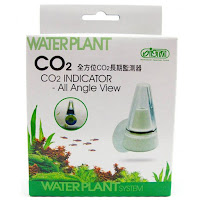 [8] CO2 Test Kit; This test kit or similar (such as a CO2 drop checker) can be VERY useful for serious planted freshwater aquarium enthusiasts. I highly recommend using a KH test kit as well for the most accurate results. The Azoo (no longer available) uses a titration method of counting drops after which you cross reference with your KH to determine the appropriate CO2 level for your planted aquarium; for example: 10-15 ppm CO2 (mg/L) at 5 dKH (90 ppm KH).
While the Ista uses a simple color chart sticker that is more simple to use, but slightly less accurate (but it still gives us our ballpark numbers we need).
Product Link:
AAP/ISTA CO2 Indicator Test
Please read this article for much more in depth information about planted freshwater aquariums:
“Planted Freshwater Aquarium Care, Information”
 [9] Multi Test Strips; Although not a specific test kit per say, I feel these should be mentioned as I personally use these for convenience for testing my clients aquariums with usually satisfactory results.
Although generally not as accurate as liquid test kits and definitely more expensive per test, they more than make up for it in the speed of testing when time is a factor (& also easier for many beginners).
As well, the accuracy of the test strips I have used rivals most common liquid tests despite inaccurate claims to the contrary as long as the strips are kept dry (make sure wet fingers are kept away from the container and that a desiccant is added once opened and you will find that the accuracy will be maintained). The shelf life is not as long on test strips though.
Besides the previous tips as to keeping the strips dry prior to use, make sure to hold the strip perfectly level after dipping, as any running of water after dipping between each test square can result in an inaccurate reading.
What I like best are the API 5 in 1 Test Strips (& similar), while these strips do not have ammonia ammonia test strips, having a nitrites test gives me an accurate idea of any likely ammonia in an established tank (or even an new cycling tank).
Otherwise this test strips kit has all the essential tests I need for my clients established aquariums (which made up more than 95% of my test needs). Only in new tanks do I generally break out the liquid Ammonia test Kit.
Three tests that I consider essential for established freshwater tanks are the KH, Nitrates and GH. (the nitrates to see if my filtration water changes are correct , the KH for pH stability, and finally the very important but unfortunately forgotten GH test for important calcium and other essential electrolytes.
MORE BLUNTLY, I find this test kit vastly more essential than so-called master test kits that lack essential KH & GH tests which for an established aquarium are a MUST from my many years of experience.
Even in marine aquarium this is an excellent kit for quick basic use as the KH is helpful for monitoring critical alkalinity.
 [10] Redox Meter; generally this water parameter will take of itself provided you perform proper aquarium husbandry including: regular water changes with properly ionized water and you maintain a GH level of at absolute minimum of 50 ppm (I find 150+ ppm better for most aquariums/ponds) with regular replenishing of essential mineral ions.
Redox Balance is also maintained by a properly installed UV Sterilizer which has its UV Bulb changed every six months.
Product Links:
*Ultraviolet Aquarium, Pond Sterilizers, Clarifiers
*UV-C Replacement Bulbs, Lamps, Page 1
This is a good parameter to check if you are having unexplained problems and every other test is correct (providing you do not have an unknown disease).
I recommend every aquarist be at least familiar with the Redox Potential, here is an in depth article about aquarium Redox:
“The Redox Potential in Aquariums (& Ponds) and how it relates to proper aquatic health” .
You can use Methylene Blue according to standard dosage to your aquarium water (remove the water for this test), and it stays a brilliant blue, you probably have a positive Redox. If the color dissipates at all (even the slightest) you probably have a reducing number.
This test in no way replaces the accuracy of Redox meter, but it is a simple way to get a handle on your aquariums Redox health.
An ORP (Redox) Meter can be helpful, not in achieving an exact number, but more in testing for normal rhythms of Redox mV. These should change during the day due to lighting, photosynthesis, water changes, use of water conditioners, mineral Cation enhancers such as AAP Wonder Shells, etc.
While the number can vary from 350+mV on the high side to -150mV on the low side, what we want to see is movement based on normal aquarium rhythms and not an aquarium stuck on any one number. As an example, despite some "old timer" an aquarium assumptions, an aquarium stuck at +350mV is likely not a health aquarium.
I have found that balance of both reduction AND oxidation is important, so in a healthy aquarium you should observe different numbers as an indicator of the primary Redox process taking place at the time, such as a reducing Redox immediately following the introduction of water conditioners that remove chlorine, chloramines, etc.
As well, having an accurate Redox reading can then be combined with an accurate pH reading to find the very helpful Aquarium rH number which in turn speaks to aquarium health.
Recommended Product Resources:
*AAP ORP Meter & Temperature Probe
*AAP/Hanna ORP, PH, Temperature Meter #H198121

[11] Silicate Test Kit; Please see the saltwater section for more about these test kits. For FW the primary use is for ongoing Brown diatom algae problems.
For more about Freshwater Aquarium Keeping:
Freshwater Aquarium Care & Information
The list remains similar and I will bypass descriptions that are in common with freshwater test kits.
[1] Ammonia Test Kit; this should be 0 as in FW

[2] KH Test Kit; you do not generally need a GH Test Kit for saltwater (Calcium is what is generally tested although a GH test strip can give you some ball parks ideas as to your Calcium levels which for a fish or FOWLR tank is likely "good enough").
KH (or alkalinity as is called in marine aquariums) should be over 240 ppm (13 dKH)
For an Advanced Marine Alkaline Tester:
AAP/Hanna Marine Alkaline Tester #H1755
Pictured to the right
[3] PH High Range Test Kit; your pH should be between 8.2 - 8.4
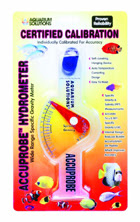
[4] Hydrometer; this instrument tests the specific gravity of aquarium water (in simple terms the amount of salts).
There are two types; the floating glass hydrometers which are more fragile, but also more accurate or the simple floating needle hydrometer that you fill with water.
It is important with both types of hydrometers to clean these with white vinegar (then rinse thoroughly) to prevent hard water buildup which will then cause inaccurate readings.
A related salt measuring device is the Refractometer, which is popular among advanced reef keeping enthusiasts.
My opinion of these based on scientific experiments is that even delicate reef corals can withstand slight variation in salt levels.
In other words I have never found any difference in reef aquariums kept at the highest level of accuracy with a Refractometer over a Hydrometer!
These can be used for making partial or full saltwater dips for freshwater fish.
For Ocean Saltwater the specific gravity should be 1.025, although many keep their "Fish Only" saltwater aquariums between 1.019- 1.024 to help slow parasite infestation and generate slime coat.
I have found some evidence of the later, but no so other than anecdotal observations (including my own) for the prior reason.
For a normal community freshwater aquarium, the specific gravity should be 1.000 to 1.001
For testing small amounts of salt in freshwater, you would need either the larger floating type hydrometer or even a Refractometer, as the popular floating needle type hydrometer generally does not test below 1.012 or 16 ppt in salt levels.
Product Link: Aquarium Hydrometer
[4] Nitrate Test Kit; Nitrates are best under 30-40 for marine fish aquariums and under 20 (even less if possible) for reef aquariums
[5] Marine Calcium Test Kit; this takes the place of the GH Test Kit in freshwater.
Calcium is important to ALL marine life (this includes freshwater too as it is often sadly overlooked), however it is absolutely essential for proper coral growth in marine aquariums.
Your marine Calcium levels should be between 400-450 ppm
Bio-availability is also essential, AAP/SeaChem Reef Advantage Calcium is among the most bio-available calcium supplements available for marine aquariums as it contains ionically balanced Calcium Chloride, Magnesium Chloride, Strontium.
The other top notch alternative is the Balling Method of bio available Calcium supplementation & chemistry maintenance for reef aquariums.
Either method, for long term best results, be wary of the use of popular Calcium Chloride Dehydrate products only or along with economy Soda Ash Sodium Carbonate products peddled by popular discount bulk suppliers can result in a slow build up of sodium chloride even with a stable specific gravity or salinity, resulting in less than optimal ionic balance for your reef aquarium.
Reference: Reef Aquarium Chemistry Maintenance
 Product Links:
SeaChem Reef Advantage Calcium
SeaChem Reef Advantage Calcium
For an Advanced Calcium Tester:
AAP/Hanna Calcium Tester #H1758
Pictured to the right
[6] Nitrite Test Kit this should be 0 as in FW
[7] Dissolved Oxygen Test Kit; This kit although not essential is very useful, especially when you suspect over crowding or problems seem to reoccur.
Saltwater (depending on salinity) holds roughly 42% less oxygen than freshwater. Warm water is much less capable of holding oxygen gas in solution than cool water. For example, water that is 90°F can only hold 7.29 ppm DO at total saturation, whereas water that is 45°F can hold 12.13 ppm DO at total saturation.
A dissolved oxygen level of 5-7 ppm is sufficient, the first signs of stress in fish will show if the DO drops below 4 ppm, fatalities will occur at 2 ppm.
These problems will affect Dissolved oxygen (Freshwater or Saltwater):
*No or too little water agitation (via the surface)
*An overstocked tank, which results in larger amounts of waste (bio load) created that in return requires more bacteria to oxygenate the waste.
*Over feeding
*Waste rotting in the filter or in the gravel (common under rocks, in Wet-Dry and Canister filters)
*Green and cloudy water.
This said as for too low of dissolved oxygen, it is possible to have too high of dissolved oxygen as well (although much less likely), this is called oxygen intoxication. Signs of too high DO are usually simple to see on larger fish; for instance, air bubbles seem to come out of the scales. Your aquarium dissolved oxygen level should not be higher than 10 ppm
[8] Magnesium Test Kit; Magnesium is an essential part of chlorophyll, which is necessary for photosynthesis, plants, including algae and the corals. Maintaining a correct magnesium concentration is very important, and is indirectly responsible for fast coral and calcareous algae growth by virtue of making the maintenance of correct calcium and alkalinity figures possible. Magnesium is depleted by algae and by the use of excessive Kalkwasser.
Magnesium is what binds Calcium Carbonate in solution, if levels are low useable calcium levels will also drop. Poor choices of Marine Buffers can further exasperate this problem, this why I STRONGLY recommend a Marine Buffer for adjusting alkalinity in marine aquariums (and EVEN freshwater aquariums) as this product has Magnesium, Calcium, and sodium bicarbonate in the proper ratios.
Magnesium levels in marine aquariums should be between 1200 and 1400 ppm.
Recommended Product Link: AAP/SeaChem Marine Buffer
 [9] Iodine Test Kit; This test kit is semi-important for reef aquaria, more so for corals, both soft and hard, although primarily softies in my experience.
Iodine is present in natural sea water in a very low concentration (0.06 to 0.08 mg/L) and this iodine occurs as several different species including iodide, iodate, molecular iodine and hypoiodite.
Natural sea/saltwater contains predominantly iodate and to a slight extent iodide.
What is also noteworthy is that many if not most iodine test kits are not capable in detecting iodate. Since in an aquarium iodide can be transferred to iodate. This means that if a test kit is used not capable in detecting iodate, a false low total iodine concentration (sum of iodate and iodide) will be obtained and the iodate concentration can climb far too high and possibly upsetting the aquarium environment.
It should also be noted that time released iodine supplements or supplements containing organically bound/complexed iodine species will give false results with many iodine test kits
This is why I suggest the Salifert Iodine Test Kit, as the Salifert Iodine Profi Test Kit measures all naturally occurring iodine species such as iodate, iodide, molecular iodine and hypoiodite.
Recommended Product Resource: Salifert Iodine Profi Test Kit
It is noteworthy that I have found that in many of my reef aquariums the need for an Iodine Test Kit is not necessary. Generally in my aquarium maintenance route I found adding a set amount of iodine worked just fine (generally about 1/2 to a full dose as per SeaChem's Reef Iodide supplement).
Only when I found some other parameters off and/or a coral (primarily softies) were doing sub par I would then bring out my iodine test kit and even then this parameter often would test OK.
Recommended Product Link for supplemental iodine: SeaChem Reef Iodide
[10] Strontium Test Kit; This test kit is important in accelerating the growth of coral and calcareous algae. Natural sea water contains approx. 7 - 9 mg/L strontium. Strontium is very difficult to test for, but if there is found to be a depletion of calcium in the aquarium then strontium levels are likely to be very low as well. Strontium concentration should be kept between 5 and 20 mg/L.
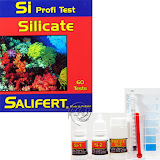 [11] Silicate Test Kit; Although listed in the saltwater section, this test kit can also be useful for testing silicates in freshwater as well, especially where Brown Diatom Algae is a continuing problem. Most silicate test kits are designed to test for silicates down to .2 ppm (mg/L).
Natural seawaters contain silicates around 10 ppm however due to differences in a closed system (which an aquarium is) and the ocean it is best to maintain silicates under 1 ppm in an aquarium to prevent diatom blooms and aid in uptake of essential elements such as Strontium by corals.
In freshwater, silicates are generally between 4-20 ppm and should be kept under 4 ppm in an aquarium, although usually this is not a problem in healthy established freshwater aquariums where lighting is good to encourage plants or green algae (both of which will starve also consume silicates limiting diatom growth)
Product Link: SALIFERT SILICATE TEST KIT
[12] Redox Meter; as in freshwater, balance is most important, except Redox is more important consideration in marine aquariums.
Achieving a Redox of about +300 to -100 mV for marine or +125 to -200 mV for freshwater are the raw numbers we are aiming for, however if you have read the article "Aquarium Redox" thoroughly including the outside links/website, you will know that this is an extreme over simplification as there are times for higher and lower Redox readings
[13] Phosphate Test Kit; as in freshwater this should near 0. High phosphate levels in marine aquariums can play havoc with the health and growth of live coral (Phosphates can block the absorption of important minerals).
For more about marine/saltwater aquarium keeping, please read this article: Marine/Saltwater Aquarium Keeping Basics & Information
See this web site for many downloadable test kit directions:
Directions, Color Charts Downloads
Other Recommended Reference Sites

Aquarium Information and Resources (Pond too)
Both basic and in depth articles

Aquarium UV Sterilization; Complete Level One UVC Sterilizer Use Information
*Aquarium Planaria & Detritus Worms

Aquarium Lighting
The most in depth and regularly updated article available FREE on the Internet!
Sponge Filters by American Aquarium
The Premium AAP/ATI Hydro Sponge Filter, from the only online seller with professional use dating back to 1978 (prior to the Internet)


Economy Submersible Aquarium, Fountain Pumps; SunSun JP-033
A better, UPDATED version of the Via Aqua 302 with SUPERIOR Performance, unlike other pumps sold elsewhere as a replacement
ADVERTISEMENT
Labels: ammonia test, Aquarium Test Kit, GH, Hanna Testers, KH, multi strips, pH, Pond Test Kit, reef calcium, titration

<< Home


