
Our Facebook Page to Follow: Aquarium/Pond Answers Facebook
This is a unique resource for answers, help, & advice to aquarium and pond questions not found elsewhere; With regular posts & article updates.
In our research; we use aquaculture, horticulture, medical, & university research to compile many of our articles.Our Recommended Lighting for highest efficiency professional planted/reef aquariums: "AquaRay Lighting"
Dropsy in Fish; Swollen Betta, Kidney Infection, Osmoregulation
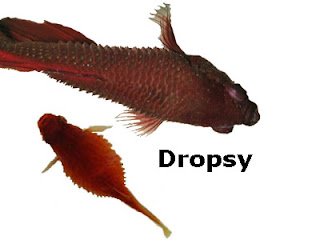 DROPSY in fish; prevention, causes, and possible treatment of this malady that is often a symptom of other problems.
By Carl Strohmeyer
Updated 11/24/21
BACKGROUND:
I've been professionally treating many fish diseases, conditions & syndromes since 1978.
Dropsy is a condition I've treated for clients many times over the decades and discussed with other leading professionals at seminars too often at seminars and industry trade shows.
What is Dropsy?
Dropsy is basically a "Condition" or "Syndrome".
In other words a symptom with many causes, often a mix of causes such as diet, osmoregulation, bacterial pathogens such as Aeromonas and generally affecting the kidneys.
As noted, most often Dropsy is Kidney related, which results in swelling and fluid retention due to poor kidney function results in the classic "pinecone" look of fish sick with Dropsy.
Poor osmoregulation is usually the second most common cause, followed by diet, and in more rare instances digestive, and maybe liver malfunction/infections.
Often it is a combination of infection of the kidney, poor osmoregulation (including oxidative stress), and poor diet (which often is the result of too high energy levels and poor protein optimization).
The loss of ability for osmo-regulation of electrolytes is often a contributing cause, which is another reason for correct positive mineral ion and trace element levels.
Please see these two articles:
*Aquarium Chemistry; Calcium, Electrolytes, GH, KH, & more
*Do Fish Drink; Proper Osmotic Function .
COMMENTARY:
Sadly a person who may or may not have some expertise is posting on YouTube video comments (including AAPs channel) touting his experience with API (a known discounter of limited aquarium medications, certainly not a seller of higher end pharmaceutical grade products such as Aquatronics or SeaChem).
He attacked my experience and expertise on this subject calling it "True Dropsy" when in fact the industry has NEVER considered Dropsy a "True" disease (which is why I doubt his so called expertise and believe he is more likely an internet troll that are so common of late trying to make a name for himself posting on many YouTube channels dealing with this subject).
He also stated that True Dropsy is not curable. Well, since Dropsy is actually a condition and not a true disease per say (example would be Septicemia in fish which is also a condition with many possible causes), some causes of Dropsy can and as a MATTER OF FACT have been cured when caught in time. Unfortunately some causes are indeed incurable no matter what one does for their fish, and even if caught early on.
This is also why prevention (as you will read later in this article) is key, as I had very few cases of Dropsy of ANY cause when certain procedures were followed.
Generally due to the cause or area of infection (or organ failure), Dropsy can often be very difficult to treat, especially if caught in an advanced case in the fish (usually in advanced stages euthanasia is your best choice).
What the aquarist often observes is a “pinecone” swelling generally caused by fluid building inside the body cavity (often involving the Kidneys), for this reason, reducing this swelling is an important step in effecting a cure.
I have heard of Minocycline also being recommended for this (although it can be effective). I do not recommend this as Minocycline has been shown to cause serious damage to the kidneys, which is the last thing you want to do to a fish suffering from Dropsy or even suspected of this malady.
Information on Minocycline:
Use of Minocycline, Maracyn 2 for fish treatment
I would also note that since Aeromonas bacteria is a common cause of infections (along with the parasite Mitraspora cyprini, more commonly found in pond fish) that result in Dropsy and since this bacterium is often anaerobic; maintaining good circulation, aeration and overall good tank hygiene goes a long ways in treatment and even further for prevention (since Dropsy is difficult to treat and cure).
Please read more about optimum tank conditions in the prevention section further into this article, as I have been able to prevent Dropsy much more successfully (as per controlled tests) than actually treat a full blown case of Dropsy!.
Sometimes liver issues are blamed for Dropsy, which is certainly possible, however liver malfunction and infections generally do not result in the classic "pinecone" Dropsy appearance, rather the fish may bloat slightly and almost always results in loss of color, loss of appetite, and the fish tends to hide more.
One of the functions of the liver is to remove toxins and this is why the symptoms I describe are more prevalent with liver issues.
Generally if liver problems are the cause, successful treatment is rare
Other issues blamed for Dropsy include swelling for egg impaction, swim bladder issues, Mycobacterium Tuberculosis, & Costia.
However, while the later two in particular can be similar, based on my decades of practical experience dealing with Classic Dropsy these still do not produce the classic symptoms and more importantly treatment is quite different.
This said, besides treatment for a possible underlying infection, you want to take steps to remove the swelling.
ADVERTISEMENT
Here are the steps I would take to have chance at defeating the causes of Dropsy in less advanced stages.
ALL STEPS ARE IMPORTANT, Skipping even a couple lowers effectiveness considerably.
These steps apply to ALL fish, not just Bettas.
Success rate from my experience when ALL steps are followed (which is in the 100s of cases) is about 50%. But I must qualify this by stating that in cases where the fish is not eating and non responsive is closer to ZERO while in cases where the fish is responsive, eating and otherwise doing relatively well is much higher than 50%,
- Change water! (25% should be fine)
- Perform a medicated bath with Methylene Blue and AAP Naladin (Naladixic Acid), OR Metronidazole, OR Kanamycin, OR Sulfathiazole.
To prepare this bath I use double dose of Methylene Blue/MethyBlu that would be called for in a direct aquarium applications in a bath of aquarium water from the tank the fish you wish to treat came from, I usually use about a ½ gallon of water, however you may use less.
Measurement of the Methylene Blue does not need to be precise as this bath should be used for about 30 minutes.
Make sure you keep the water in a warm area, as in a cold room the water temperature can drop rapidly which would stress the fish.
Please Read:
*Medicated Fish Baths
As to the previously noted antibiotics or Sulfa Based Drugs (such as Sulfathiazole or Maracyn Plus), I GENERALLY have used twice the recommended in tank strength in these baths of the before mentioned medications (Metronidazole, etc.) with the possible exception of Kanamycin.
Keep in mind that Kanamycin, while not as toxic to kidneys as Minocycline, it is still toxic, yet is also very effective for infections of the kidneys! The point being is use with caution and do not use in the main aquarium, only in baths when fish have Dropsy so as to keep the exposure time low but effective (hence the double strength treatment in the short duration of a bath).
Recommended product links/references:
*AAP Methylene Blue
*AAP Premium MethyBlu
*AAP Naladin (Naladixic Acid)
*AAP/SeaChem Kanaplex
*AAP/Mardel Maracyn Plus
*AAP SulfaPlex Sulfathiazole
I STRONGLY recommend the use of salts in this bath as well at about double the normally used tank strength; 1-2 teaspoons sodium chloride (regular salt) per gallon and 1/8 to ¼ teaspoon Epsom salt per gallon of bath water.
Further Reading about sodium chloride salt use:
Salt/Sodium Chloride use in Freshwater Aquariums
Do NOT pour this water back into your display aquarium when finished!
This can be performed twice per day.
For further information (more in depth) about fish baths, please read this article:
Fish Baths/Dips for supplemental (& even primary) treatment of Bacterial infections - Add one tablespoon of regular salt (sodium chloride) per 5 gallons of aquarium/tank water or even 1 teaspoon per gallon if the fish will tolerate this (NOTE, this second dose is TEAspoon, NOT tablespoon.
Add a FRESH AAP Wonder Shell or similar product to add needed calcium and mineral cations (beware that the Wonder Shells sold via Amazon and other discounters are not only not an authorized product, but they are not fresh either, so the benefit of redox improving mineral Cations are lost).
What these minerals will do is add electrolytes and change (and improve) the osmotic balance of the fish vs. the surrounding water to hopefully pull fluids thru the body thus reducing swelling. Basically we are attempting to duplicate the balance osmotically with the fish' blood which is .9% salt
For more about electrolytes, please read this article: Aquarium Chemistry; Why calcium and electrolytes are important - Treat tank water with Kanamycin (Kanaplex), or possibly with Neomycin or AAP Naladin (Nalidixic Acid).
Also consider feeding the infected fish with fish food soaked in Neomycin such as Neoplex along with in tank treatment of Kanamycin (hospital tank is best).
Then add a Medicated Wonder Shell to the holding/hospital aquarium.
Other treatments of note are Minocycline (Maracyn II) and Metronidazole (SeaChem makes an excellent pure Metronidazole).
Further Reading: *Use of Kanamycin, Kanaplex in Aquariums, Ponds
Additional recommended product links/references:
*SeaChem Neoplex (Neomycin)
*SeaChem Metronidazole
Generally, a “cocktail” approach with more than one medication is necessary for "Classic" kidney related Dropsy, such as Kanacyn and Metronidazole OR Neomycin along with a Medicated Wonder Shell together (and this still includes the baths!!).
Please note that combining Metronidazole with Neomycin does not improve results, so this "cocktail" combination should ONLY be with Kanamyacin with EITHER Neomycin or Metronidazole along with a Medicated Wonder Shell.
OR just AAP Naladin (Nalidixic Acid) ALONG WITH a Medicated Wonder Shell! In fact Naladixic Acid is specific to kidney/urinary tract infections, so is an excellent choice for many of not most Dropsy causes!!
Sometimes the bath as prescribed earlier along with Kanamycin & a Medicated Wonder Shell is just enough to affect a cure (assuming a cure is even possible).
If Mitraspora cyprini is the root cause, the cocktail is more effective with either Naladixic Acid or Metronidazole being one of the "ingredients".
The advantage of using the AAP Medicated Wonder Shell™ is this is the only fish medication that combines medications that oxidize, all the while providing Redox reducers to fight oxidative stress, which with kidney and fluid retention problems is an important factor to consider.
Product Resources:
Medicated Wonder Shell
AAP Naladin (Naladixic Acid)
Sometimes raising water temperature to 82-84F can help, in particular if the cause is primarily osmoregulation. However if a bacterial pathogen is a part of the problem, this can actually make things worse.
Here is more info about aquarium medications:
AQUARIUM MEDICATIONS; treatments, how they work, and which ones to use and not to use - Another potential additional "natural" treatment that has been proven human use for digestive issue is Oregon Grape Root.
Suggested use is opening a 400 mg Oregon Grape Root Capsule into 10 gallons aquarium and/or fish bath water along with before suggested antibiotics.
For more about Oregon Grape Root use for aquarium/pond fish:
Aquarium Medications Part 4; Oregon Grape Root
PREVENTION:
The Aeromonas bacteria (that is often present in healthy aquariums) can cause infections that will manifest this way in poor water conditions, especially in aquariums with poor circulation and high amounts of DOC (dissolved organic compounds) along with a high "Bio-Load" as Aeromonas Bacteria can be anaerobic and thrive in low oxygen, high dissolved organics conditions.
Reference:
Aeromonas Infections in Fish
So maintaining a healthy aquarium with regular water changes, good filtration (if possible, as this is why I see more cases of Dropsy in Betta kept in a bowl), and maintaining optimum water parameters; Ammonia and nitrites 0, kH 50+ ppm, GH 100+ ppm, & nitrates under 40 ppm (the lower the better, so 20 ppm or less is better yet).
A water parameter that is often missed (as the more obvious ammonia and nitrites are usually noticed) is proper calcium and electrolytes (positive mineral cations). These mineral Cations help balance oxidative stress which can have an impact on Kidney function & fluid retention. This can be tested in rH/Relative Hydrogen Score with healthy aquariums should have a rH reading between 23 & 26
If RO or RO/DI is used (or drinking water that is nothing more than RO water with a few minerals added for “taste”), there are usually insufficient electrolytes and calcium for proper osmotic function and fluid retention can result, which will then lead to kidney infections. Make sure to properly re-mineralize if RO water is used
Please read these articles for more about this aspect of fish care:
*Proper Osmotic Function; Use of RO Water
*Aquarium Redox & rH
* AQUARIUM CHEMISTRY; The importance of Calcium, GH, KH, Magnesium to Fish
All this goes a long way in prevention of Dropsy and other diseases, especially when poor osmoregulation is the direct cause or even indirect cause of Dropsy.
By indirect I mean opportunistic infections getting a foothold internally in your fish due to poor levels mineral cations & buffers present in your aquarium water.
Use of true level one UV Sterilization..
Similar in benefits to mineral Cations, but not having a direct impact on osmoregulation, the use of level one UVC Sterilization lowers oxidative stress in the water column, which over time has a direct impact on fish health and longevity, including likelihood of issues that can result in Dropsy symptoms.
Reference:
*Aquarium/Pond UV Sterilization
A proper diet makes a large difference here.
Do not feed your fish "meat based" proteins. I recommend aquatic based proteins such as whole menhaden or white fish meal, shrimp or even the proteins found in spirulina algae.
As a basic Betta diet I recommend Sanyu or Hikari Betta Gold pelleted foods.
There are many other quality Betta foods as well, although I do not recommend flake foods for bettas as their staple diet.
However Flake Food such as Spirulina based Spirulina 20 are excellent when used as a "fish food slurry/soak" for frozen or freeze dried brine shrimp, worms or other carnivorous diet food that Bettas prefer
For other fish, fish food guru Clay Neighbor's AAP Custom Premium & Spirulina 20 are excellent staple diets (in fact, easily the best when the science of fish nutrition is applied including energy levels and fiber)).
Poor quality proteins (or better; unusable amino acids for fish) can lead to digestive problems or Renal failure, which CAN lead to the symptoms of Dropsy.
All proteins are made up of amino acids, some are usable (by fish), and some are not.
Those that are not are disposed of by kidneys in the fish. This can lead to renal failure or infection.
This is where highly digestible foods come in and more importantly fish food that optimize/limit their ingredients such as Clay Neighbor's Custom fish foods.
Unfortunately even among so-called premium fish foods, the common method is to utilize "the more the better" method of ingredients, in particular proteins. This can and DOES slowly result in kidney damage that can result in many opportunistic infections, including those that result in fish dropsy.
Oxidative stress to the kidneys over long periods of time by fish foods too high in energy levels is something to consider when looking to prevent Dropsy.
While changing to a better diet once a fish is diagnosed with dropsy is too little too late from my experience, changing to a better more optimized diet is certainly good prevention for dropsy and other fish diseases for your existing fish.
One of the few if only fish foods that truly optimize/limits ingredients is Clay Neighbor's "AAP Custom All Natural Optimized Fish Food" (there are a few copycats that do not know the exact formula that are not quite up to par here).
Also it is often a good idea to soak dry foods in water for 5 minutes prior to feeding as this will remove air that can lead to infections of the digestive tract (goldfish in particular).
For more information about proper nutrition, see this article:
"Fish Nutrition; What ingredients are needed for proper fish growth and health".
See also this section:
Fish Nutrition; FD/Frozen Foods Spirulina Slurry
Other suggested reading:
Spirulina Algae; The Aquatic Health Benefits for Tropical, Marine and Goldfish.
Fish Food Recommendations, product links:
*Clay Neighbor's "AAP Custom All Natural Optimized Fish Food" (includes Carnivore for Bettas)
*Spirulina 20 Fish Flake Food
*Hikari Betta Bio-Gold
*Hikari Spirulina Enhanced Brine Shrimp
The above is a VERY short list of quality, highly digestible fish food diets, so please read the article I suggested earlier about Fish Nutrition!!
To summarize prevention; I have seen very few cases of Dropsy in the literally 1000s of aquariums I have maintained in regular contracts over the years. This is because I followed ALL Steps outlined in the AAP Aquarium Disease Prevention Article, and the facts of this article speak for them self, especially when it comes to Dropsy.
Reference: Aquarium Disease Prevention
HOWEVER, I have seen MANY cases of "Classic" Dropsy (as well as Dropsy like problems) when non regular service customers call me out to see why their fish are sick and I often will observe very poor water conditions feeding practices, etc. (basically NOT following the steps in the article outlined above).
The reason is simple for my regular contract customers success, I have always maintained my tanks with regular cleanings, proper electrolyte levels, a balanced Redox, proper fish nutrition, and often UV Sterilization.
Other Recommended Reference & Product Sites
Our special formulation of Nitrofurazone, Sulfathiazole Sodium, Methylene Blue and sodium chloride.
Wide spectrum. Anti-microbial, anti-protozoan, anti-bacterial, anti-fungal. Good for newly arrived fish in quarantine situations.
Also good for healing wounds and ammonia burn on newly arriving fish. Works well for sores on fish in Koi ponds..
* “Aquarium Disease Prevention”
In controlled test/studies, the incidence of Dropsy was almost non-existent where all points outlined in the above Disease Prevention article were followed!!
*UV Sterilization, Sterilizer Use; The importance in fish disease prevention
*Freshwater Aquarium Care Basics & Information
*Aquarium Filtration Information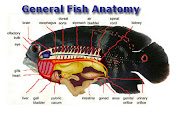 Fish Anatomy For further help in understanding the anatomy of fish (so as to know where the Kidneys are located), please read this article.
*Planaria & Detritus Worms in Aquarium
The best in Quartz, Under gravel, and Titanium Submersible Heaters:
TMC V2 RO Filter systems; the very best you can buy with TDS meter:
 Reverse Osmosis Aquarium Water Filters; with TDS Meter

AAP AquaRay Ultra Premium Aquarium LED Lights
Highest in PUR, The ONLY LED with an IP67 rating or higher for water proofing along with a full 5 year warranty to back them up!
Why purchase brands without this rating such as the Finnex, Current, or Fluval only to be essentially placing an electronic light emitting device over your humid aquarium with little or no guarantee? In the long term, you WILL PAY MORE!
ADVERTISEMENT
Labels: Betta, Boby Fish, Dropsey, Dropsy, Fish Kidney Infection, Pinecone Fish, sick fish, Swollen Fish

<< Home


